A Camino in Cologne - Part 2 - Cologne Cathedral
Ok - this amaaaaazing cathedral - I mean seriously.
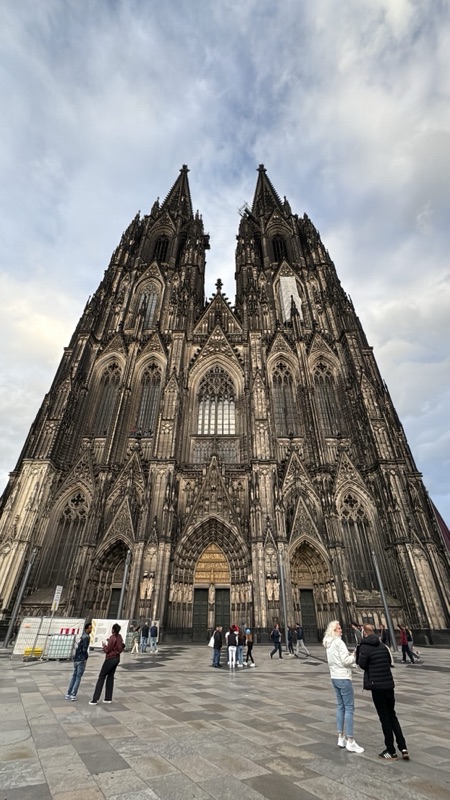
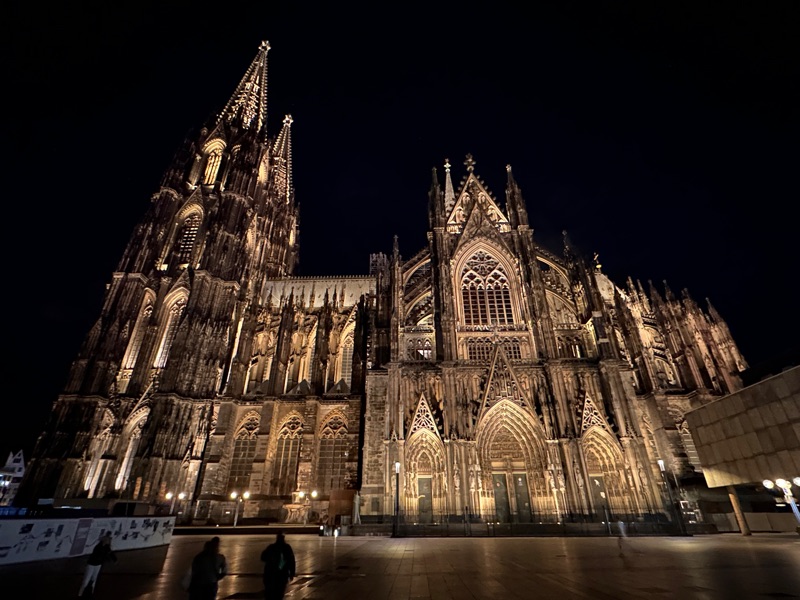
The Cologne Cathedral was built three times. The first one was probably a more ordinary church, built in the 6th Century. The Edict of Milan was the impetus for this, as it was a tolerance edict by Constantine in 313 that said that Christians should not be persecuted and that there should be a spot in every Roman city for Christians. So the land dedicated to this was the location of the original church. The baptistery from this first church still remains today, though I didn’t see it.
The second church called Hildebold Cathedral was built in the 9th century as a Romanesque church. It took about 100 years to build. It arrived on the map when the bones of the 3 wise men came to Cologne. The story goes, Empress Helena (mother of Constantine) brought the relics from Jerusalem to Constantinople and then they were brought to the city state of Milan. They were exhibited in a church there until the leader of Milan had some financial troubles and was not able to pay taxes to Frederick Barbarossa. Frederick took the relics from Milan and gave them to the Archibishop of Cologne in 1164. They were displayed in simple wooden boxes in the church.
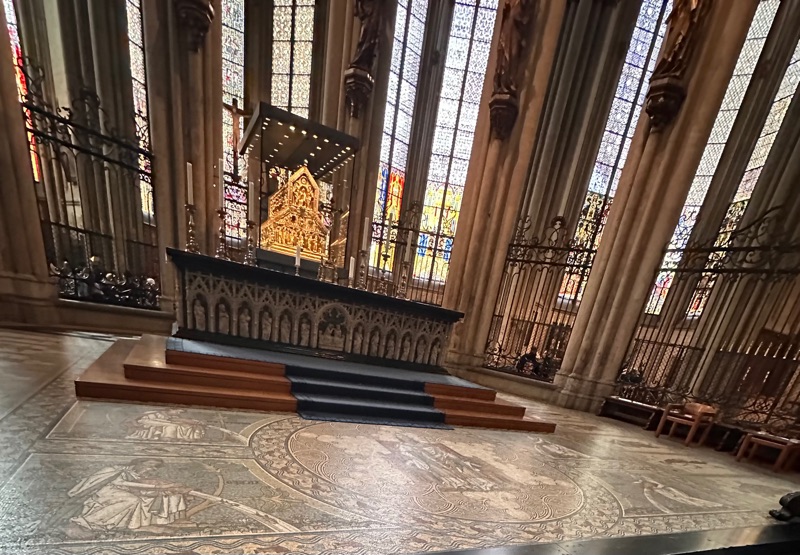
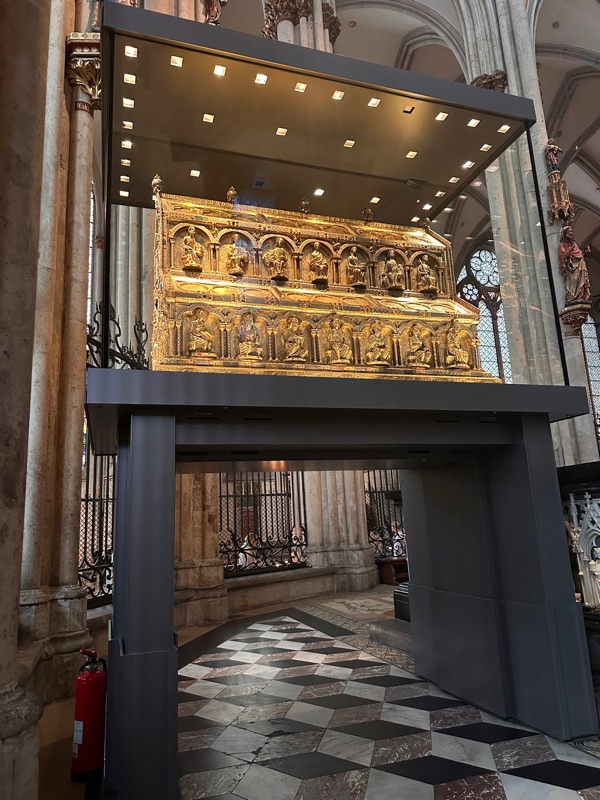
Once the relics were in Cologne, there was a huge influx of pilgrims who came to the city to pay homage. So Cologne became a very wealthy city. The archbishop decided to create a proper gold shrine to the bones, so he commissioned Nicholas de Verdun, a famous goldsmith, in 1190, and he finished it in 1220. This shrine is what is there today, and super impressive. Then more people came to Cologne to see the shrine, so even more money was coming into the City. So the archbishop then decided to build a gothic cathedral (a cathedral now because at this point Cologne was recognized as the “Holy City of Cologne”)on the site of the Romanesque church.
So in 1248 (our tour guide said that was 40 years before Düsseldorf was founded because there was someone on our tour from Düsseldorf lol), the Cathedral began construction on the foundation of the second church.
The choir to the east was the first part of the church that was built, because that was where the altar was. The church was going to be the largest and tallest church. This part of the church was completed in 1322, and they put up a wall at the west end of the choir and it officially became a church.
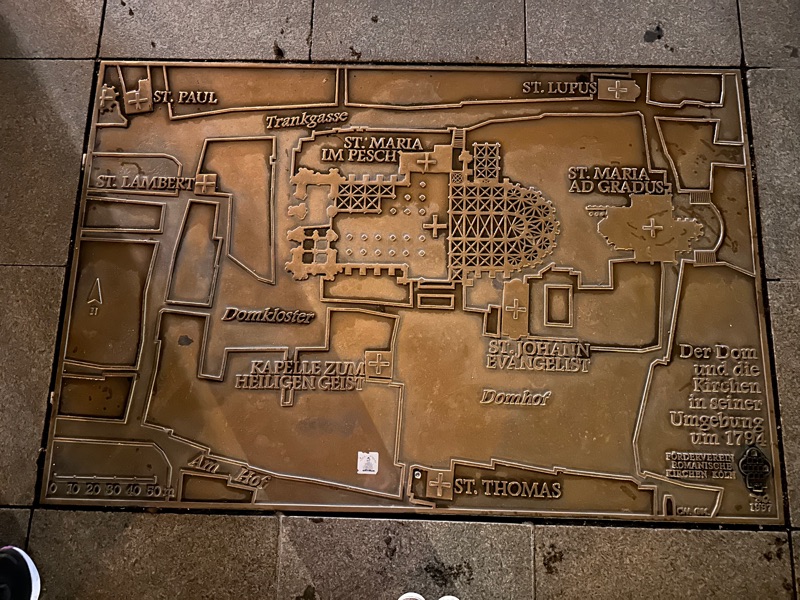
The 2 southern side naves (there are 5 total) were built next with part of the front tower up to 55m in height, under construction for over 100 years until 1520. Two problems arose at this point:
- The Protestant Reformation was happening, and Martin Luther was all the rage, telling people that pilgrimages were bad, and a form of idolatry, and that people should stay home and be a good neighbor. Thus, the tourism to Cologne slowed dramatically.
- The discovery of the New World, when people started focusing on overseas trade. Since Cologne is on the Rhine River, it loses business to the seaports that have more access to the Americas.
So the Cathedral remained unfinished for centuries, even with the medieval wooden crane still standing.
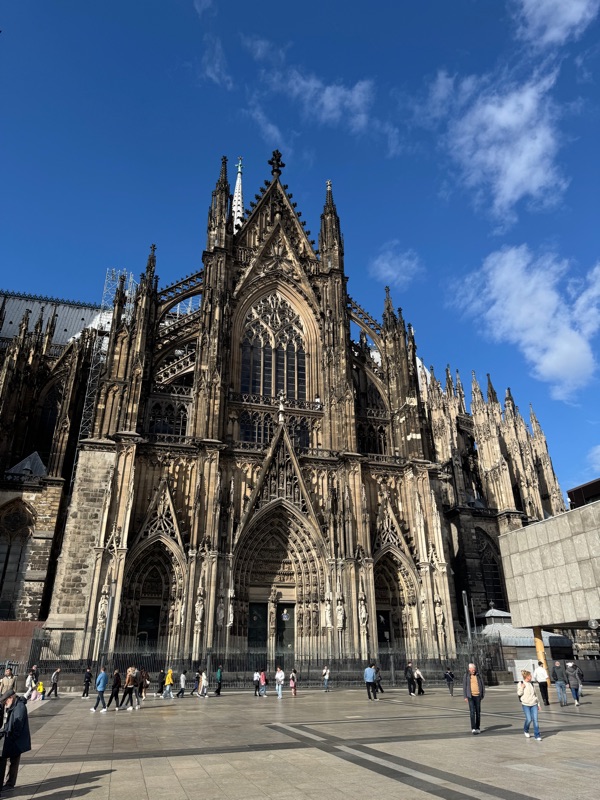
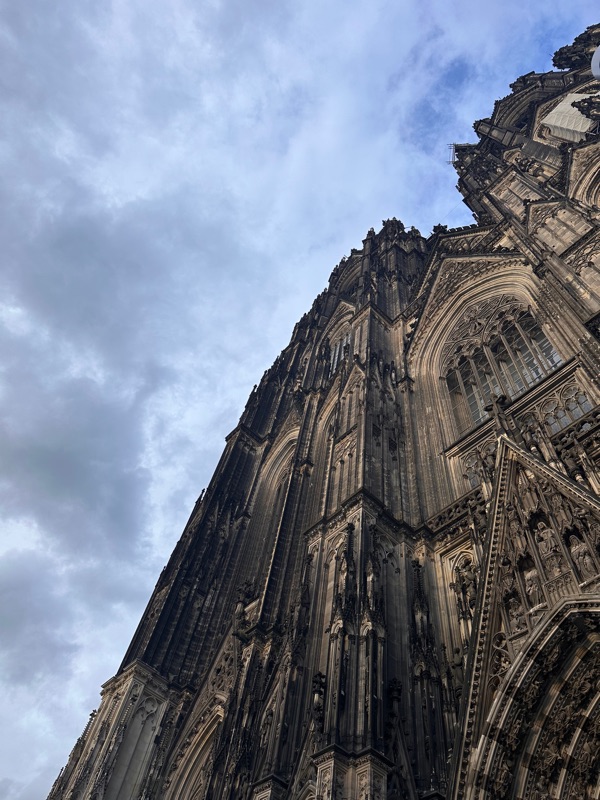
In 1814, Napoleon was defeated and the Prussian King Frederick William IV came to power. He was fond of medieval things so the Colonians approached him to help them finish the cathedral. Prussians also wanted to see the Cathedral finished to symbolize national unity under Prussian leadership. The plans from the 1200s were sent from Paris, and Frederick sent money to restart construction in 1842, the choir wall was taken down in 1863, and it was finally completed in 1880 based on the original design. Incidentally, Germany was founded based on the Treaty of Versailles in 1871. The building was the tallest building in the world for 4 years until the completion of the Washington Monument, then it was tallest Cathedral until Ulm was completed 6 years later, and now it is the tallest 2-spired church in the world, at 157m.
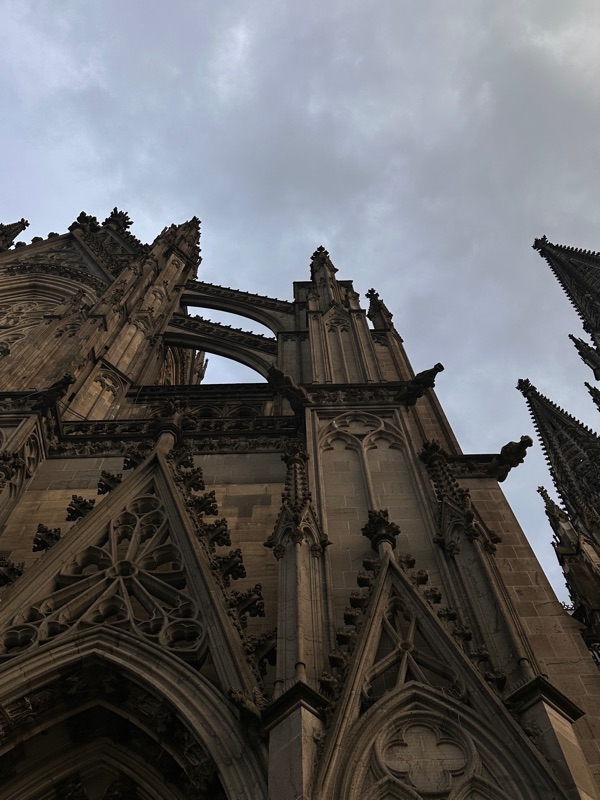
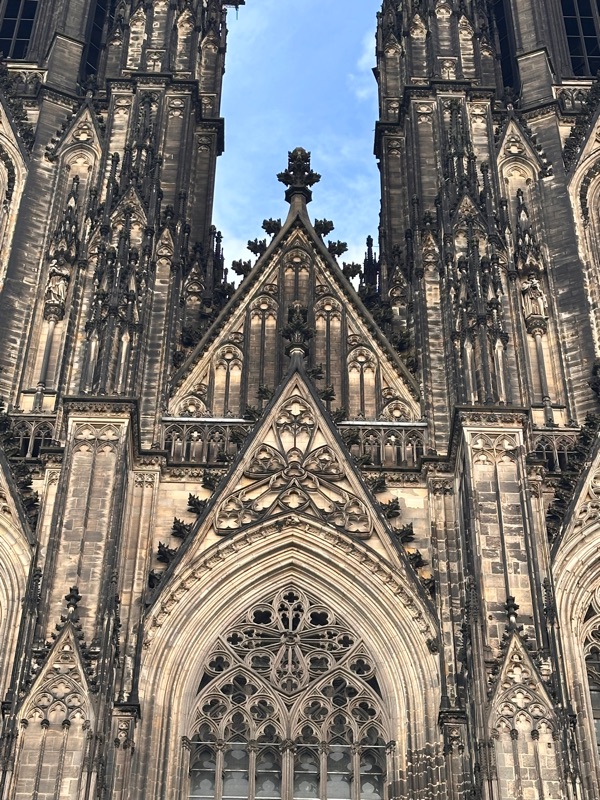
flying buttresses and gargoyles
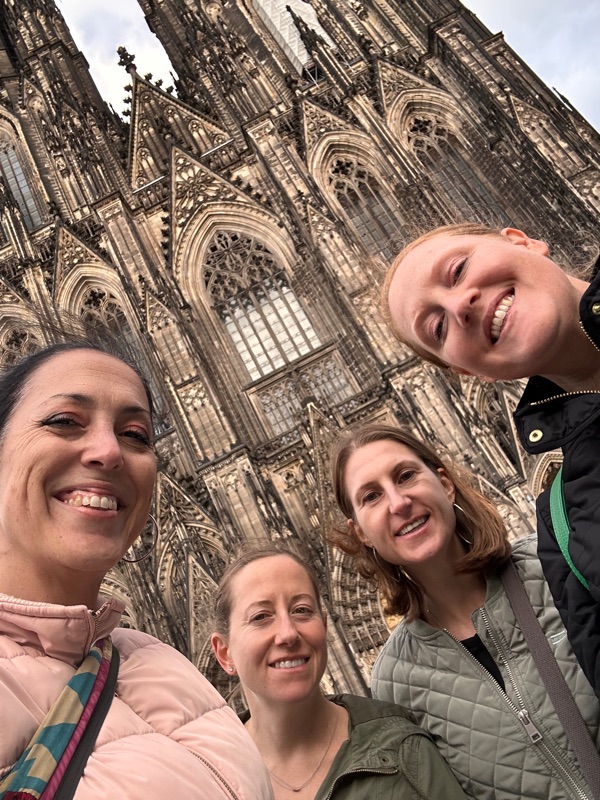
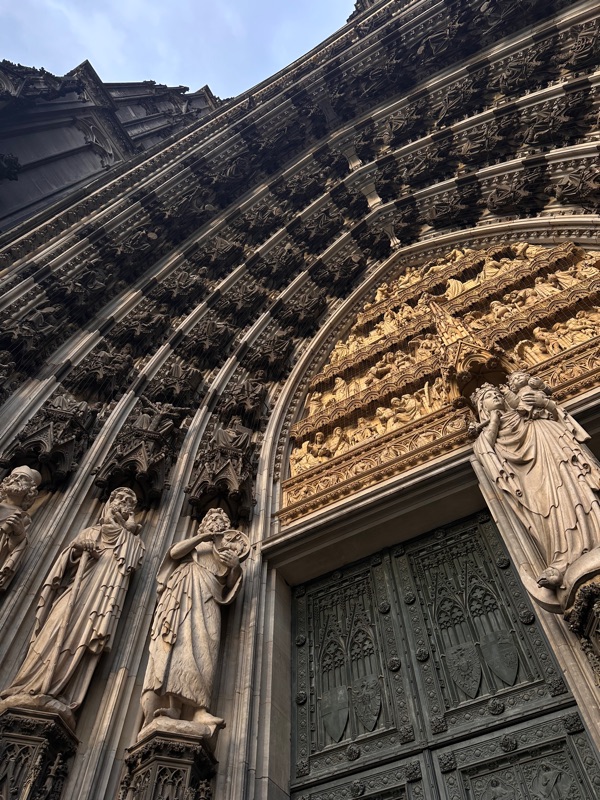
main entry
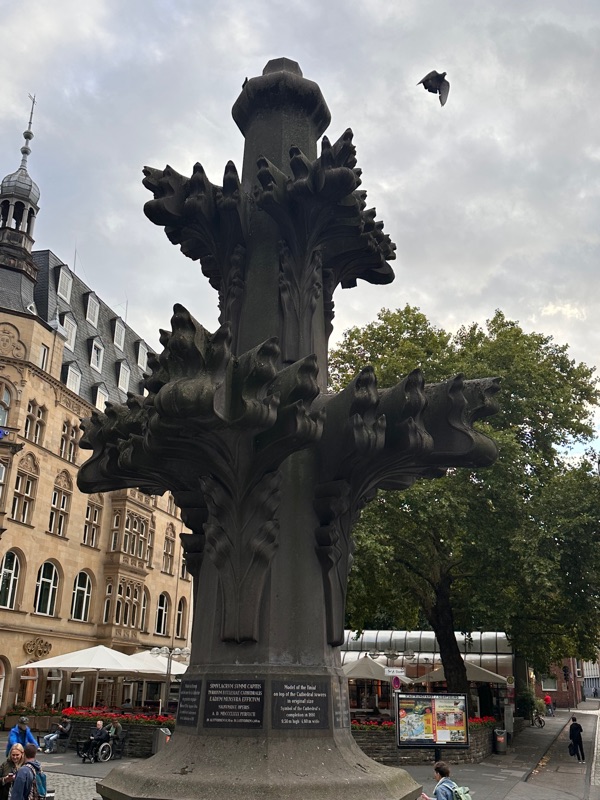
a replica of the spire at the top of the towers
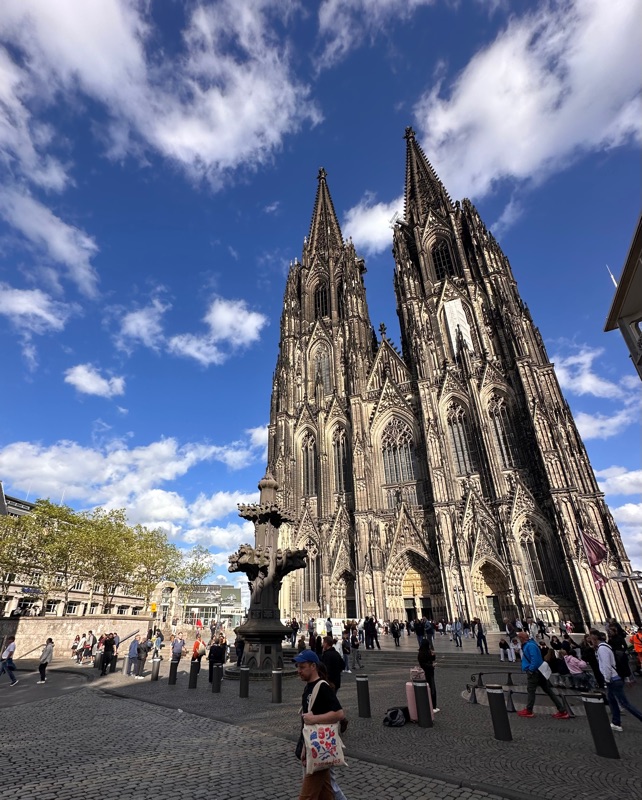
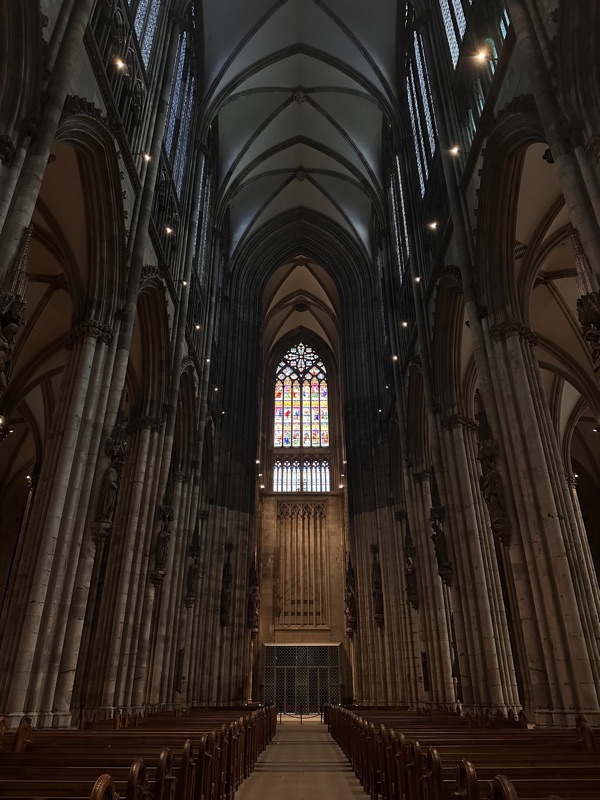
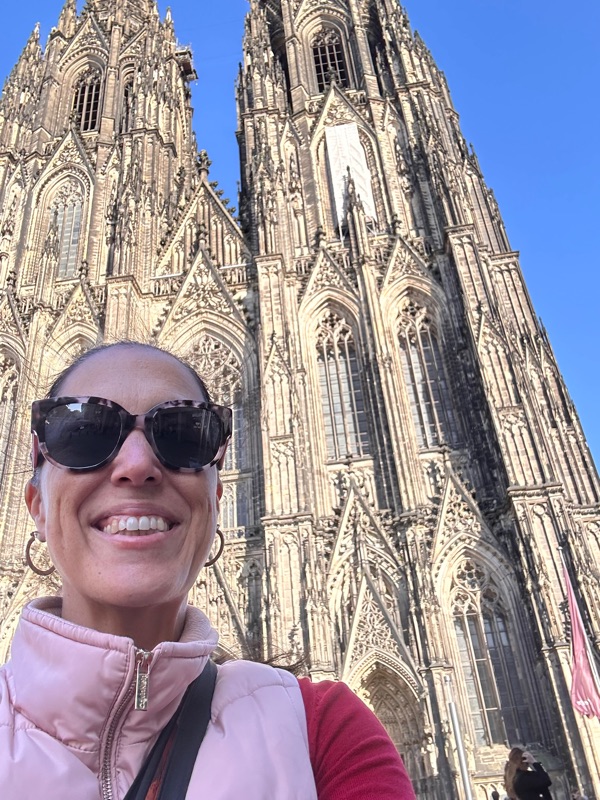
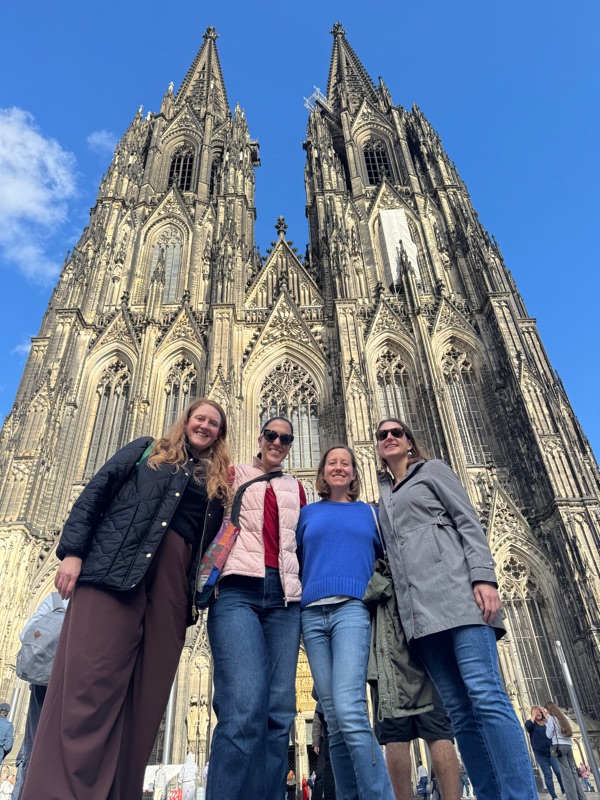
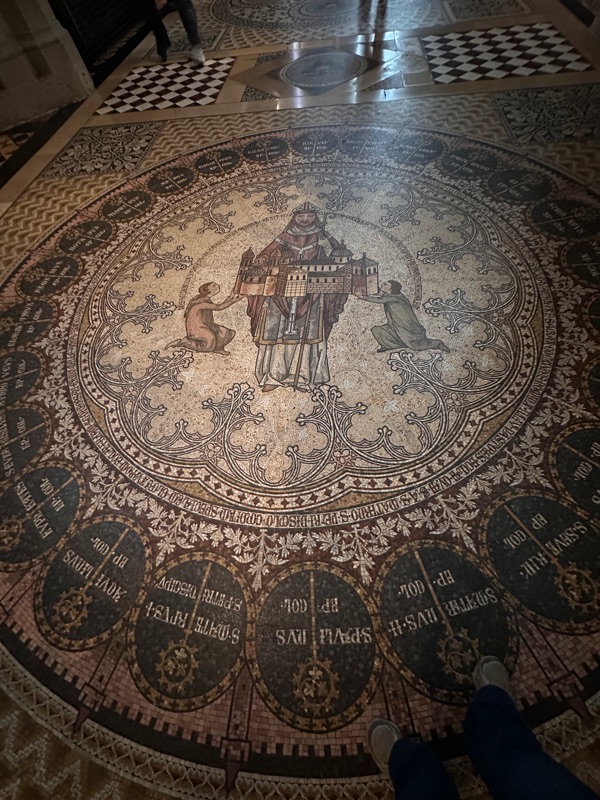
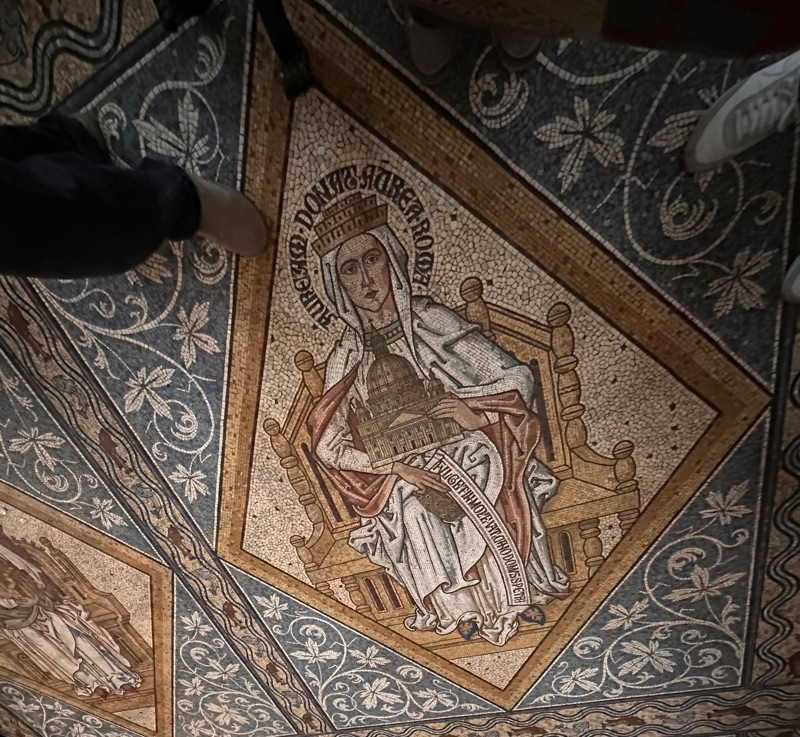
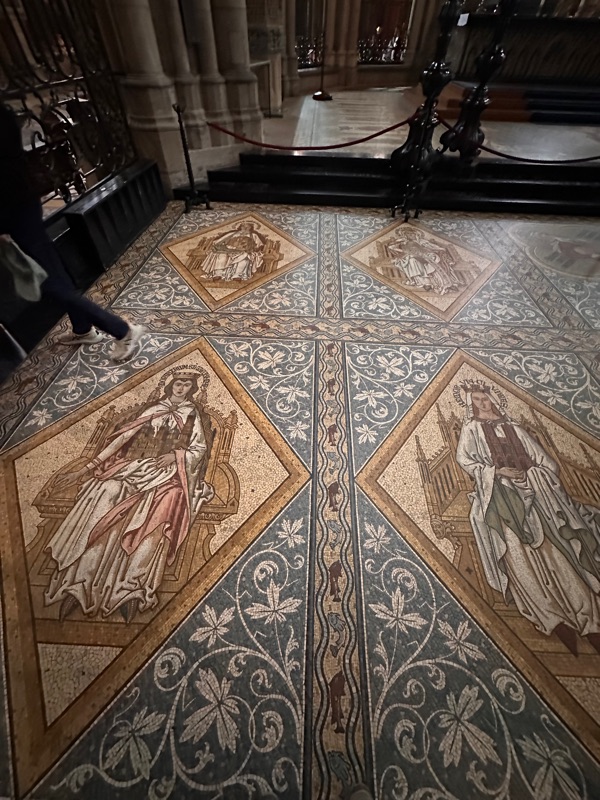
In 1898 the 15th century floor was rebuilt with mosaic tile. There is a cool mosaic by the altar that has 4 women representing the church presenting 4 churches - St Peters, Hagia Sophia, Reims Cathedral, and Santiago di Campostela.
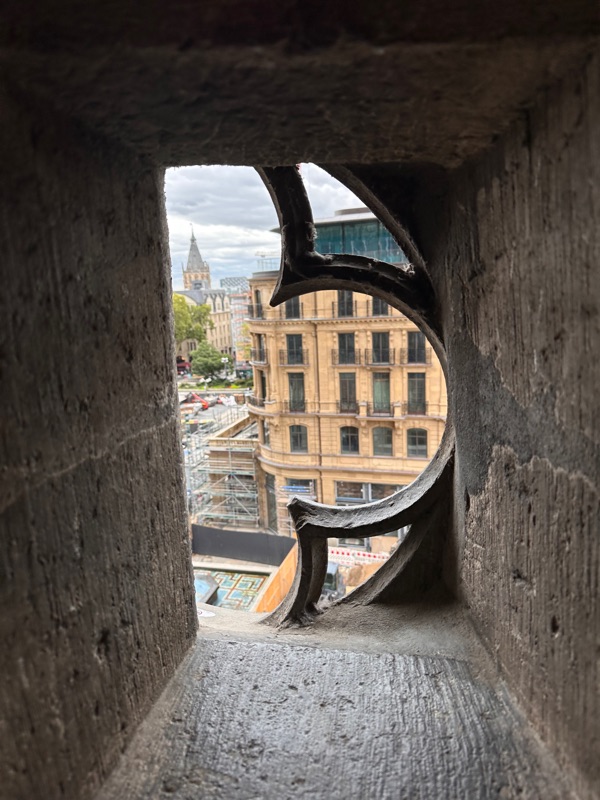
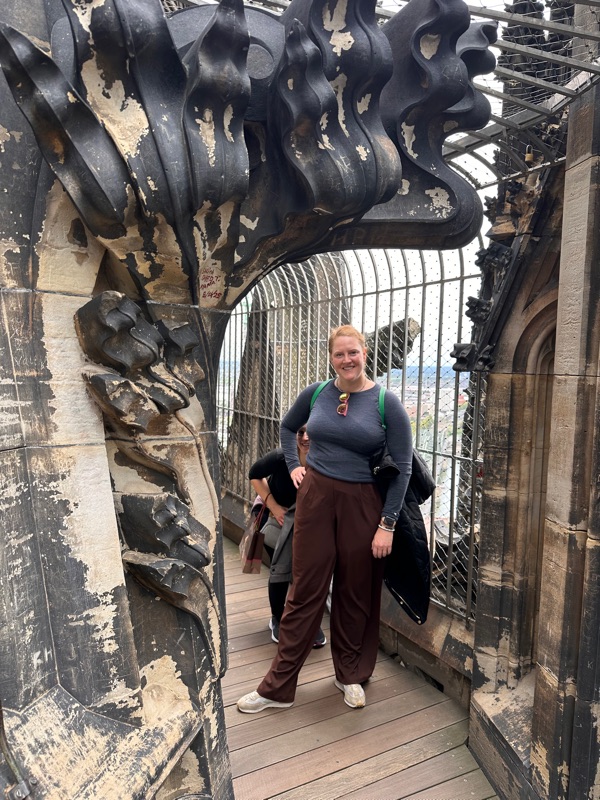
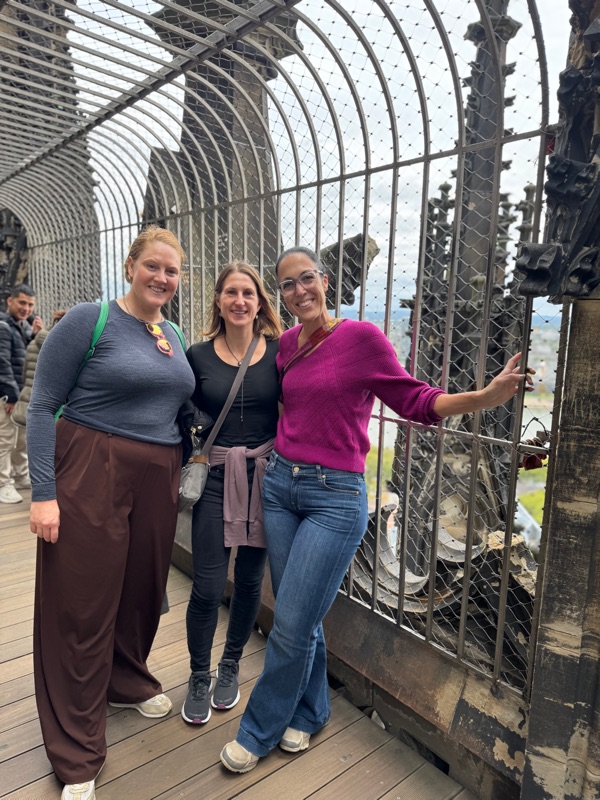
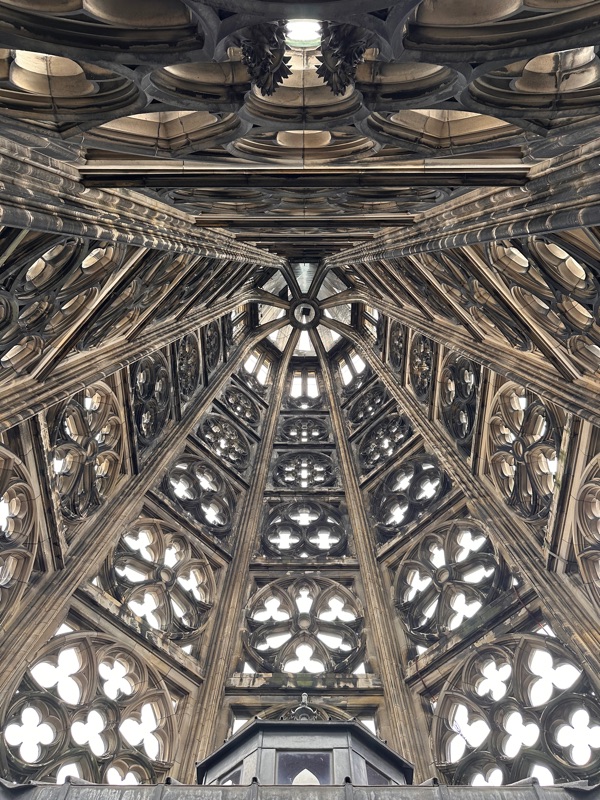
After the church tour I met up with my comrades and we climbed the tower, which was 533 steps, which was so cool. We walked through the bell tower and went up to one of the spires with great views of the architecture, the flying buttresses, and the City. The cathedral is made of sandstone, which absorbs the dirt of the City, and they have given up on cleaning it. But there are some pieces of the Cathedral that were rebuilt after World War II that are lighter in color. The Allies decided that because it was a great landmark for air raids, they intentionally did not bomb the church, but accidental bombs damaged it.
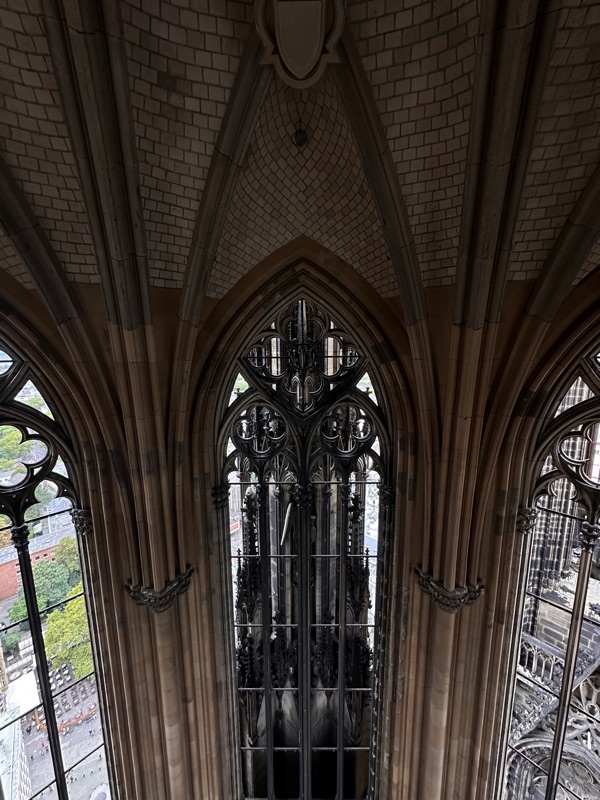
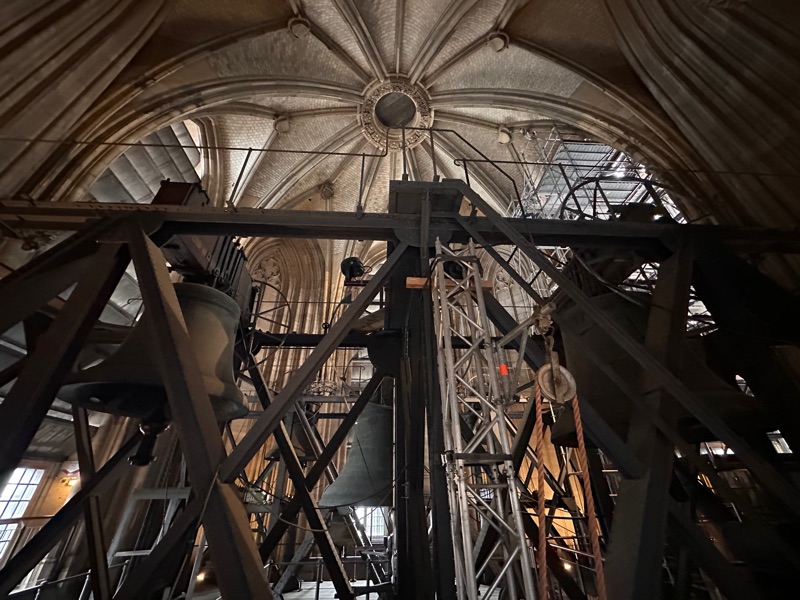
the bell tower
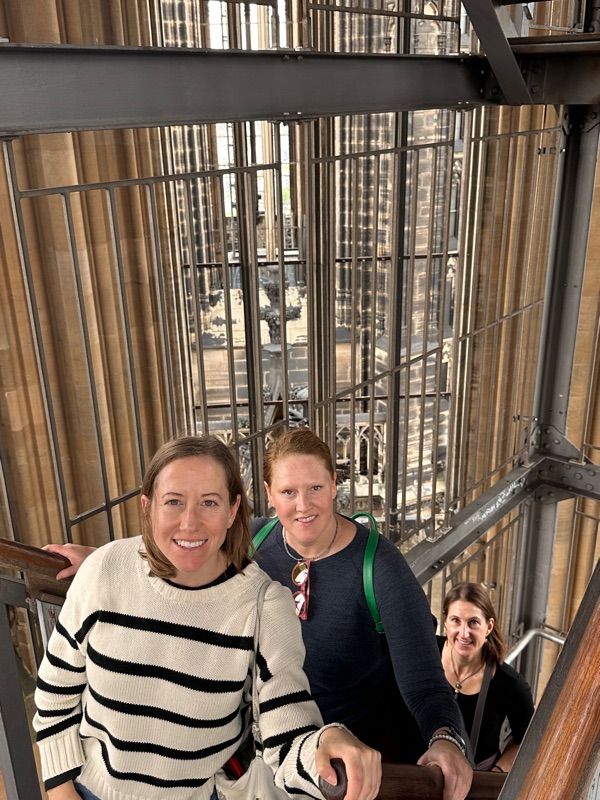
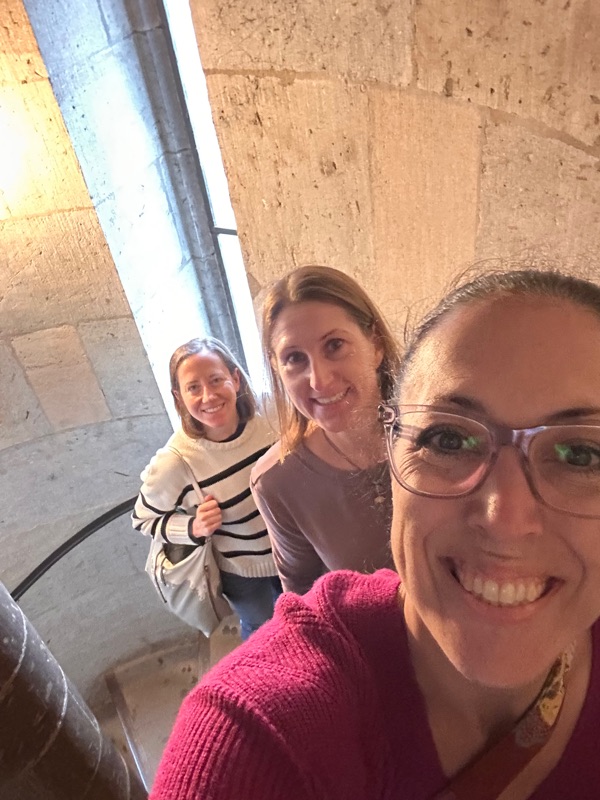
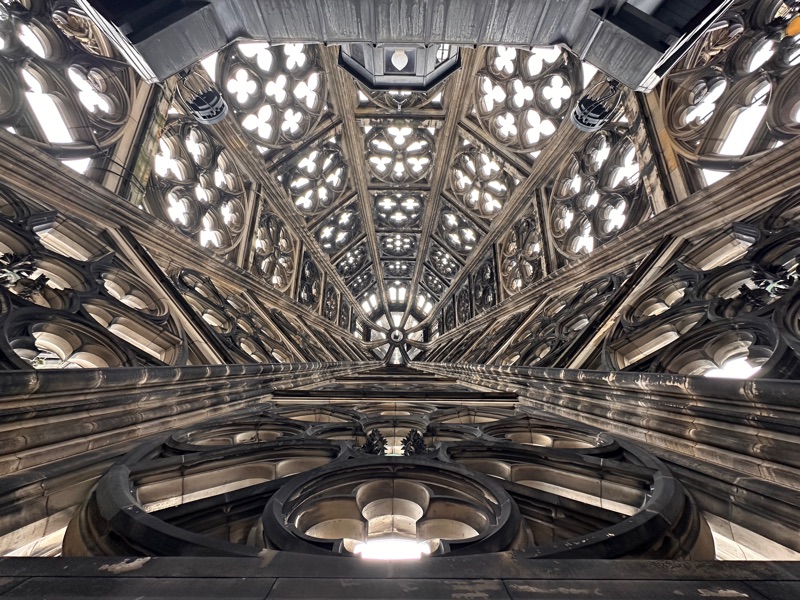
inside the top of the towers
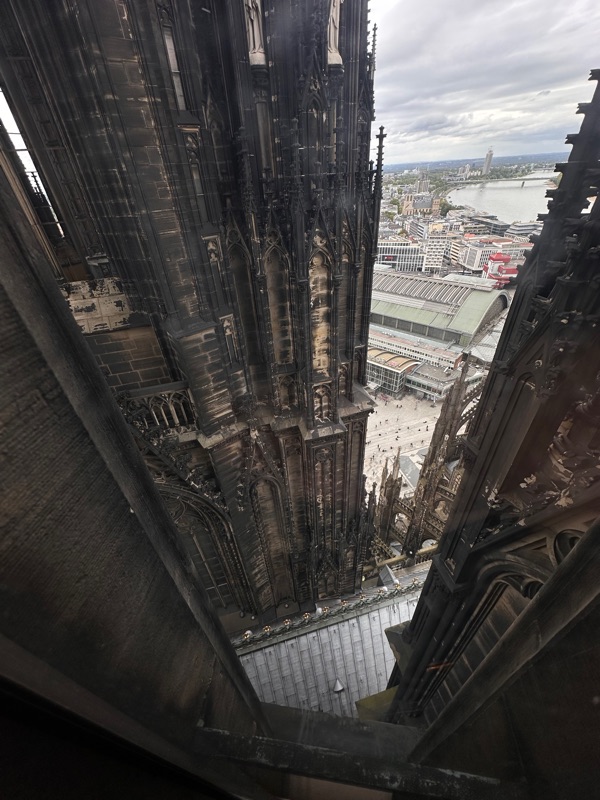
looking down on the roof
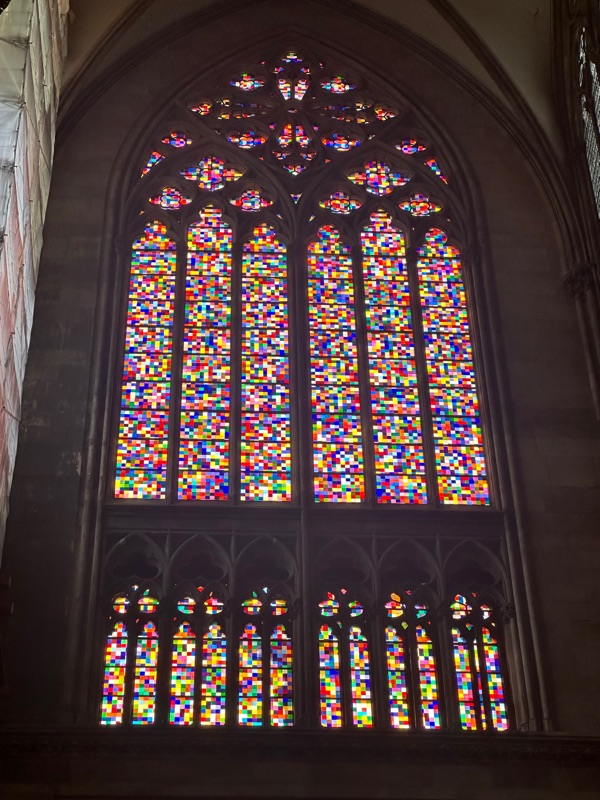
During the war the master builder, to the disapproval of Hitler, took the windows (dating from the 1200s to 1800s) down to protect them from attack. 80% of the windows were saved. The roof was destroyed and rebuilt out of steel. The last window to be installed is on the south side and is a more abstract and modern window by artist Gerard Richter. It contains 72 colors that are all found in other windows of the Cathdral and is said to be a memorial of the holocaust. In looking at it, it looks random, but when you look closer, it satisfies our human nature to find order - the windows in column 1 mirror column 3, same with 4 and 6, and 2 and 5.
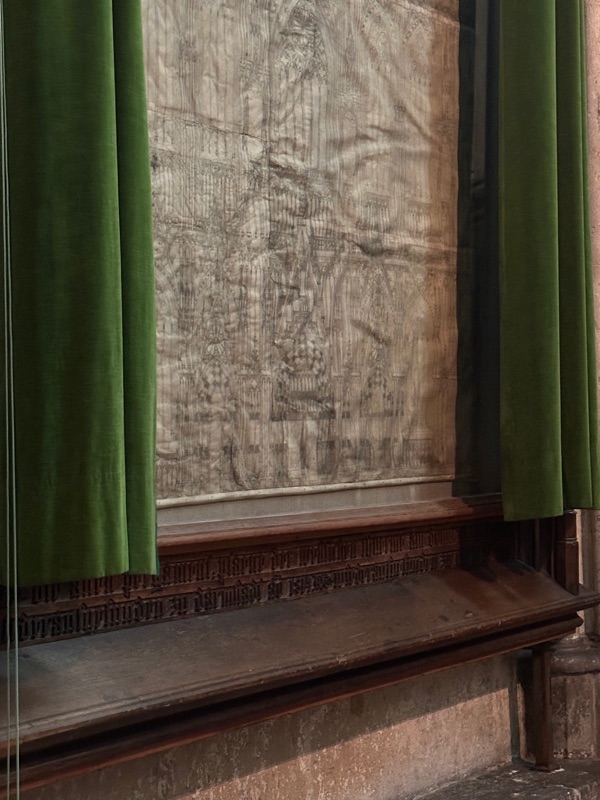
The church has 7 apses behind the altar - considered the most ideal design for a cathedral. One of them contained the original goatskin drawings for the cathedral - our guide said the curtain was accidentally left open and we were able to see them!
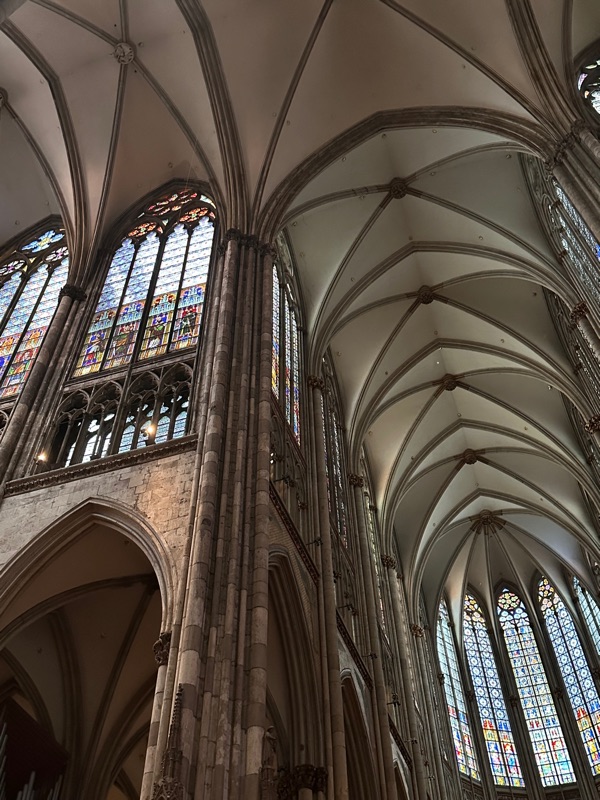
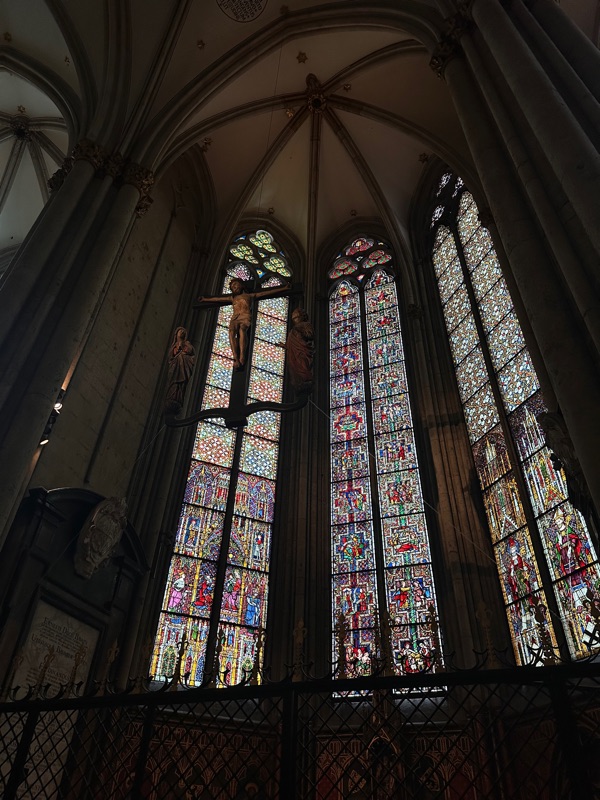
The windows behind the altar are the oldest, dating back to the 1200s. This was a time when very few people could read or write, so they used the stained glass windows to tell a story. The 2 columns here are showing the stories of the Old Testament and how they parallel stories of the New Testament. Examples:
- On the bottom, we have the story of Adam and Eve on the left and the birth of Jesus on the right.
- 6th up from the bottom we have Noah’s ark with a dove flying above and on the right we have Jesus baptism, also with the dove.
- Further up we have Jonas and the big fish/whale for 3 days on the left and Jesus in the tomb for 3 days on the right.
A few extra fun facts:
- Because Cologne is no longer a very religious city, the church is most crowded on 2 days - not Christmas and Easter - the day before the first football match and the day before Carneval.
- The scariest gargoyles are on the north because that is where Düsseldorf is and also where all evil comes from. Some gargoyles have lost their heads but there is one that is the head of a goat, their football team mascot.
- The original organ burned down in war then was rebuilt in 1948, was complimented with swallows nest organ in 1998. The two can be played as one organ or individually.
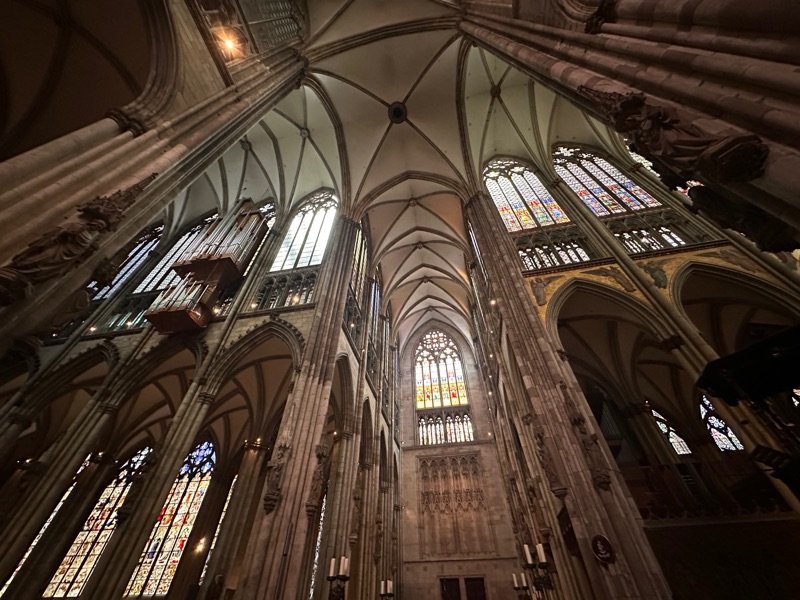
swallows nest to the left and original organ on the right


Comments
Post a Comment