A Camino in Cologne - Part 1
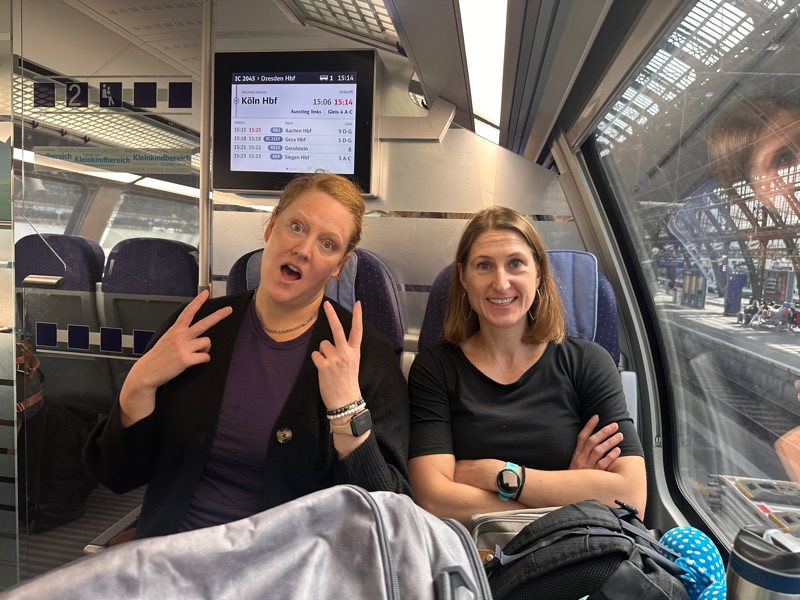
Our second city was Cologne (“Köln” in German, still don’t know how to say it right), which is in the western part of the country. It was a 2.5 hour journey with a bus down from the hilltop followed by 2 trains. Our first train was late so we had 4 minutes to get to the second train and it literally closed in our faces and started driving away. Fortunately we were able to get on another one and weren’t delayed by much.
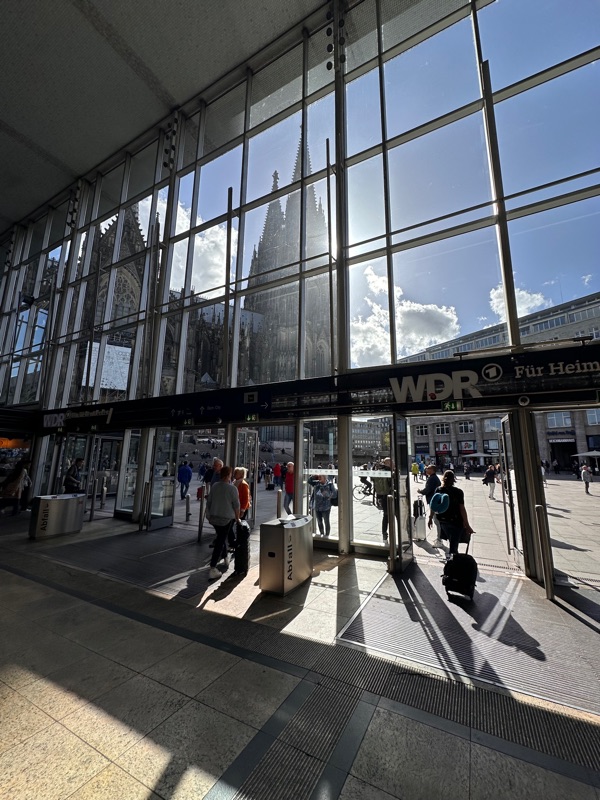
We arrived at the train station and from the lobby I looked out the window and BAM the most majestic cathedral was right there out the window. It was such a cool surprise, this photo doesn’t capture it at all.
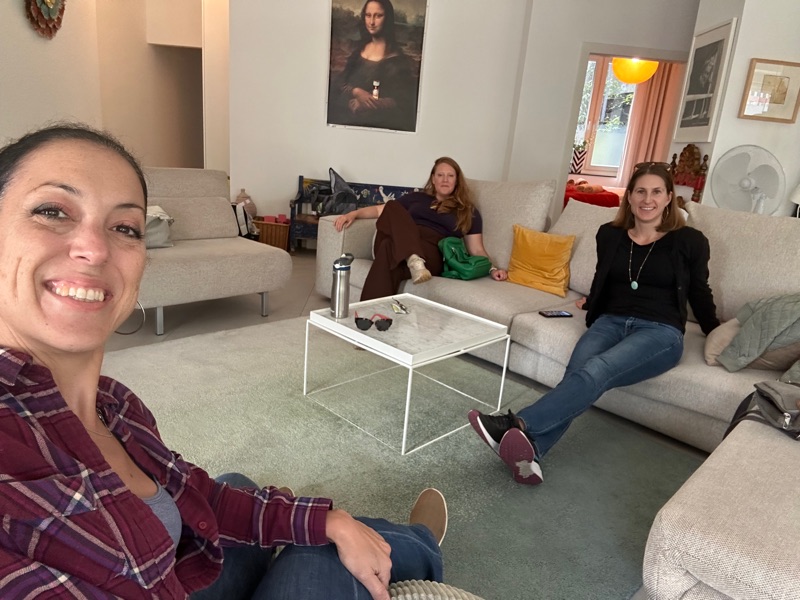
Our AirBnB in Cologne was awesome, it was spacious and actually on the ground floor - I have never seen a European residence on the ground floor so that was interesting. The only downside was that it was what felt like 2cm away from the train tracks so the apartment shook a little bit with every train that went by.
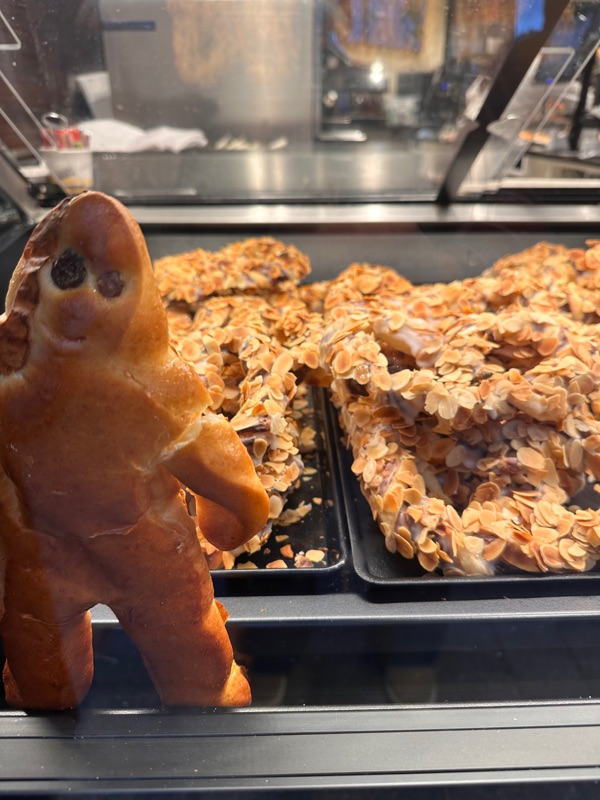
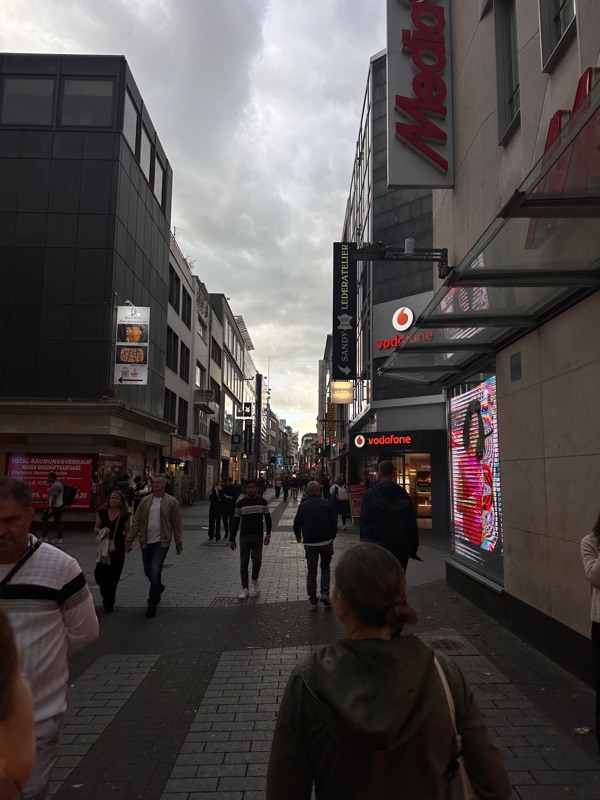
We put our stuff down and headed out for a walk around the City Center. We stopped by the Cathedral then went to the commercial area for a late lunch at this lovely outdoor spot called Funkhaus. Weird thing about Cologne and maybe Germany in general - it will randomly just start raining, then be sunny, etc. - will literally switch on a dime. The plaza where we ate had this pastry shop that had these nougat almond pretzels in the window with swarms of bees around them. No one seemed to mind the bees, but it was very unnerving to just be looking at a display cabinet with 30 bees flying around something you want to order. We decided to wait until later to buy our pretzels.
At that point it was time to head to our Kölsch brew house tour. We met our guide Jacob at the cathedral and headed to Früh, the first one. A little history on brew houses here in Cologne…
Back in the day beer and alcohol were the only things safe to drink (might culturally explain why alcohol is cheaper to order at restaurants than water!!!). Because Germany was part of the Roman Empire, wine was a thing, but the grapes here were not great so beer became part of the culture. Monks used to brew it dating back to the 13th Century. Kölsch beer, native to Cologne, is a top fermented beer, which is paler than beers from the south (Bavaria) which have an older origin. It is easier to chug (I wouldn’t know ;) and it is served in .2L glasses in contrast to the larger steins in Bavaria, mostly because it has less carbonation than southern beers.
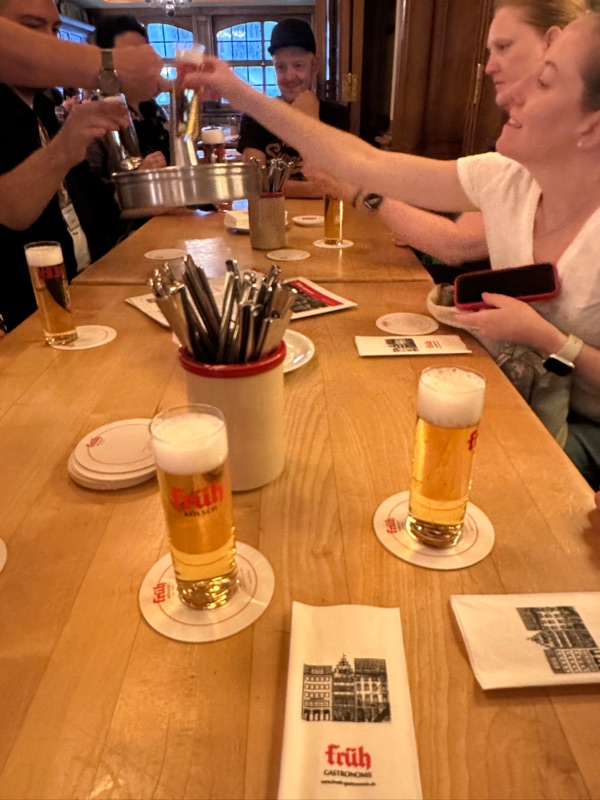
What makes it Kölsch?
- It is brewed in a location where you can see the Cathedral (kind of like Champagne)
- It follows the beer purity law for ingredients
- It is a top-fermented clear pale beer so less carbonated
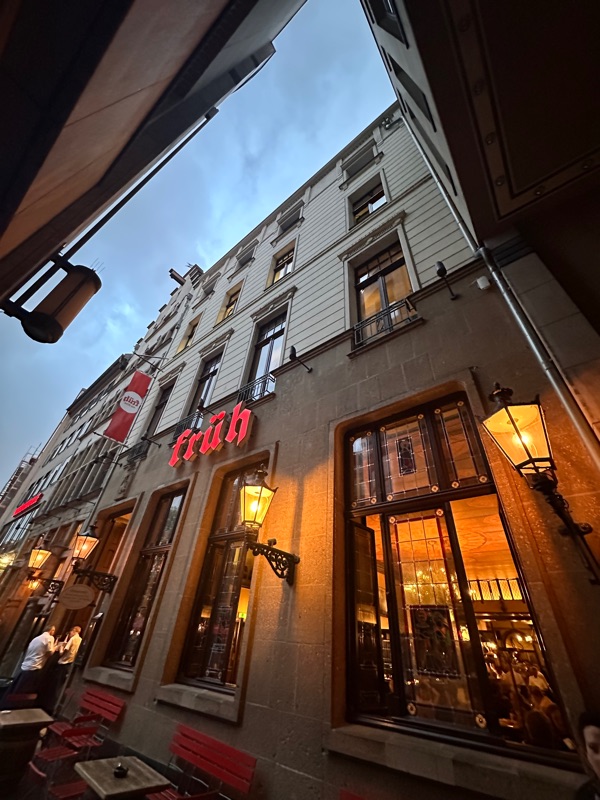
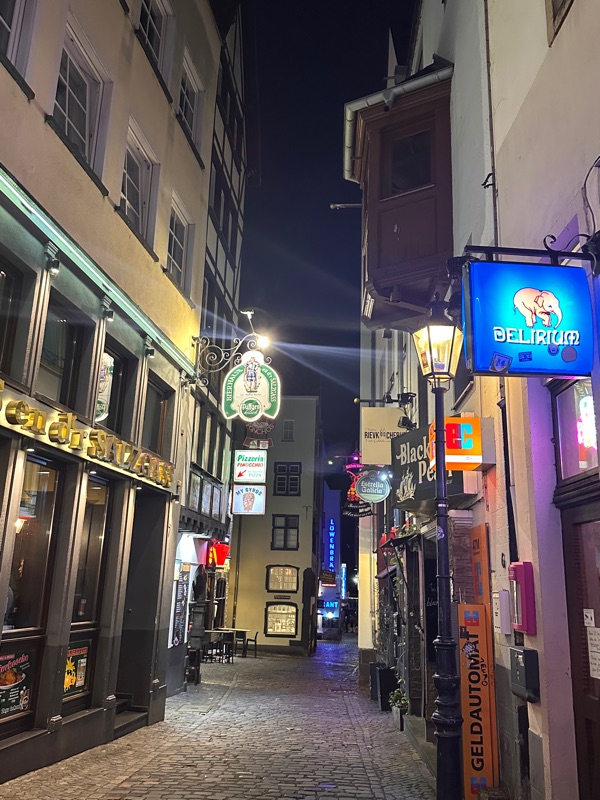
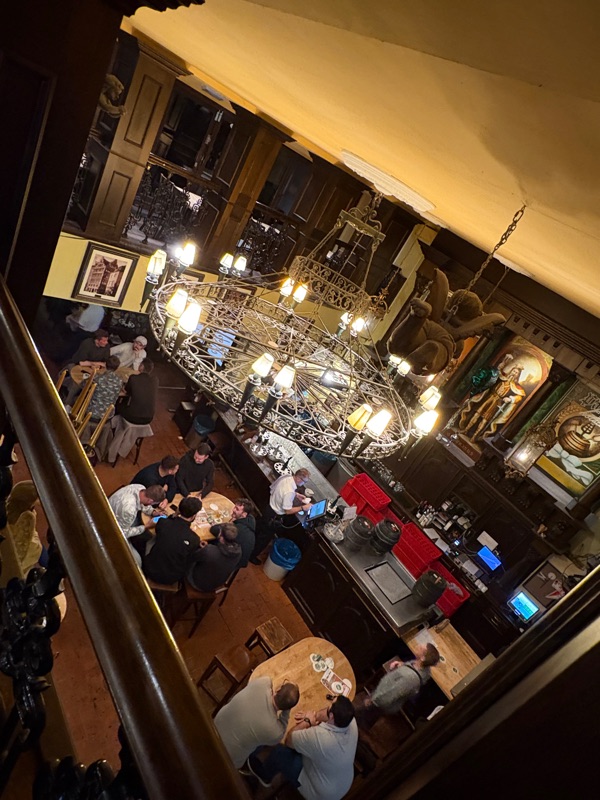
Beer halls were the central community stop in Cologne, with no music playing so people can chat. The biggest one in Cologne is Früh which fits about 3000 people. It is where you go to catch the game for sure, I can only imagine what it would be like on game day. It is a cozy place with lots of smaller rooms. At beer halls everyone was treated the same, and the easiest way to tell the upper class was that they were able to bring their own cutlery to eat the food with. The waiters (called köbes) there carry around serving trays called Stange that have 11 little glasses (10 for the table and one for the waiter). They will come by and replace your glass whenever it is looking low, whether or not you ask. With each glass they serve you they will mark it on the coaster to keep track. When you are done you need to put the coaster on top of the glass so they don’t serve you anymore. To be a köbes is a lifelong career and people can have this profession for 30-40 years. They work on commission, have a swagger, and work 12 hour shifts. At the end of the shift they used to be interrogated by the manager of the beer hall to make sure they weren’t too drunk, and there are still confessionals in some of the beer halls.
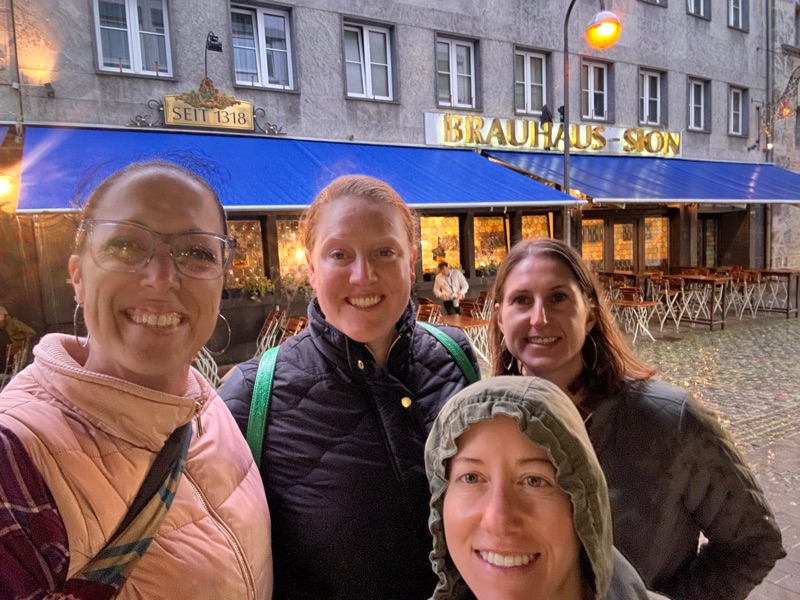
Our first stop was Früh, like I said, the largest one. At beer halls the Kölsch is served directly from barrels, so everything is draft. When we walked out of Früh we went to Sion, which is one of the oldest, dating back to 1318. They serve honey beer (let’s be honest it all tastes the same). Sion is a little less touristy than Früh and considered a little more refined on her food menu side.
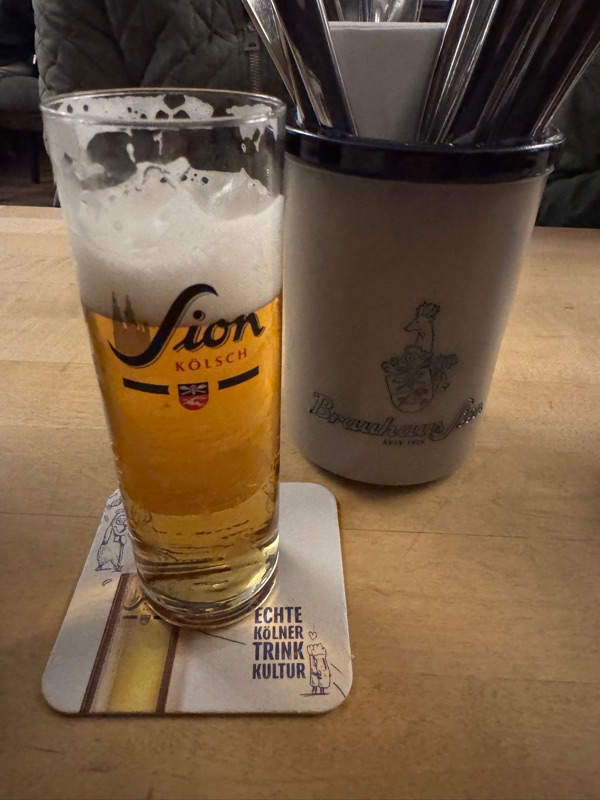
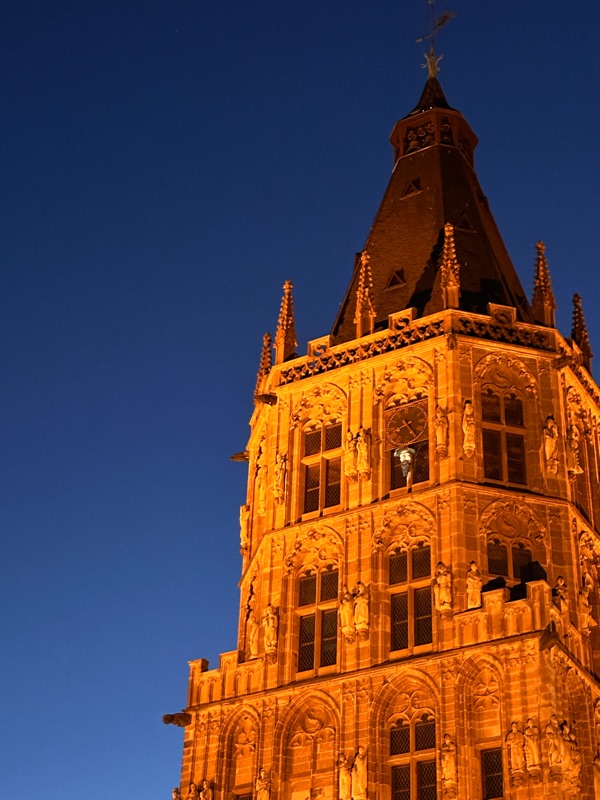
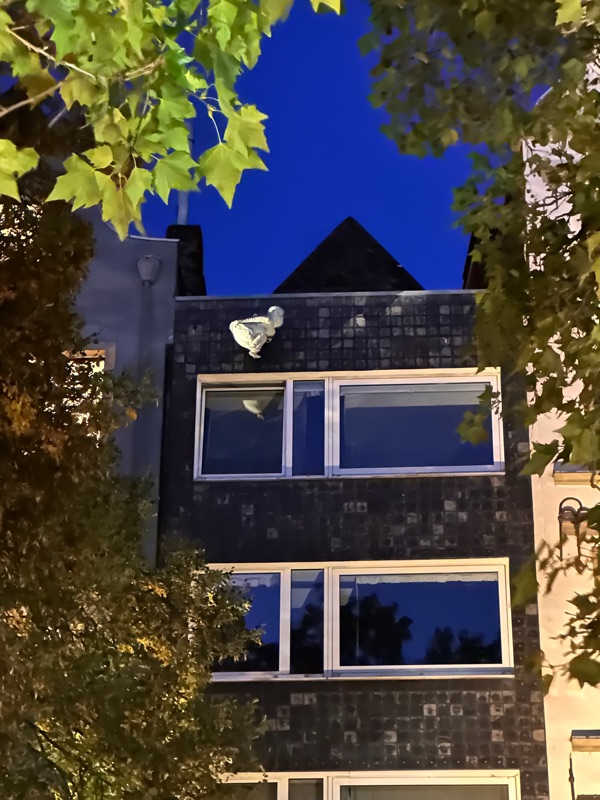
From Sion we walked by the City hall where there was a playful representation of classism in medieval Cologne - There is a face on the top of City hall that represents the wealthy, and every hour the face’s tongue sticks out and wags the number of what time it is. On the other side of the plaza is a response to this face, which is a naked backside, representing what the townsfolk thought of the upper class. The City Hall also has a lot of sculptures of figures from Cologne history, the most historical on the bottom and the most recent on the top. Under the sculptures are editorial sculptures that say what the City thought of each of the people. For example, under the statue of the archbishop who put a tax on beer, there is (elegantly described by Carolyn) a naked “male undercarriage” letting us know what the Colonians thought of him.
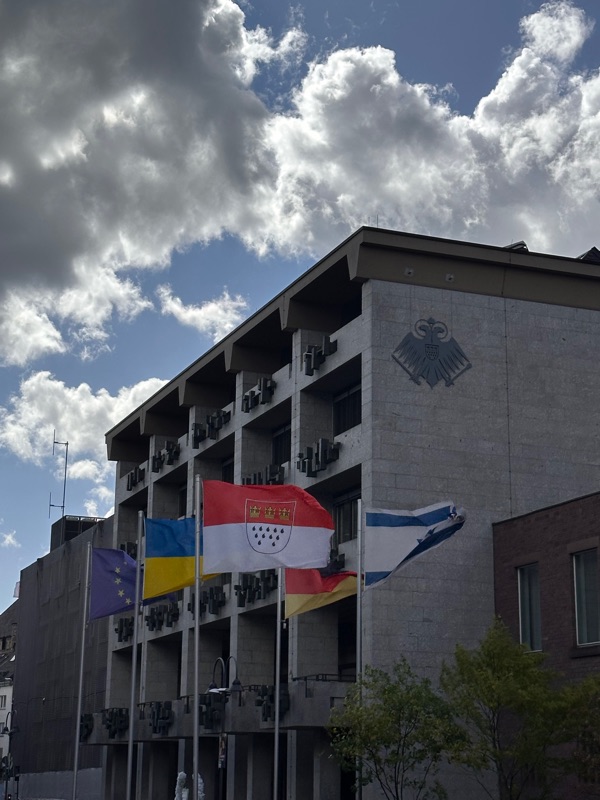
This is the “new” city hall - I thought it was interesting that they have the flags of Ukraine and Israel here. Definitely a political statement.
Our last stop was the Päffgen beer hall, similar vibe to the others, another family brew house. At all of these places the beer is now brewed off-site instead of in the basement. A fun story about this one was that Bill Clinton wanted to visit Päffgen when he was in town for the G8 summit in 1998 and the Secret Service gave them a list of requirements - one of the requirements was that they needed to close the hall to the public, so the owner actually said no, and Bill Clinton did not end up going because the Owner did not want to close his doors to the community.
Our first full day in Cologne started with the marathoners going for a run and the chillfolk going for a nice breakfast and coffee. Carolyn and I asked the waiter if he spoke English and he said, yes, probably better than German - lol. He looked Turkish - the city seems to be pretty multi-cultural but a lot of Turkish culture in the city center.
Our walking tour guide was a Norwegian named Sander who was super animated and knew so much about the City. In English they call themselves Colonians, which always throws me for a loop because I visualize three pointed hats and muskets from the American Revolution. A brief history of Cologne:
Originally a Roman military encampment on the Rhine dating back to 55BC. The Germanic tribes were all fighting when the Romans arrived, and the Ubii tribe teamed up with the Roman’s to defeat all the other tribes. So the City was set up with the Roman settlement on the west and the Germanic tries on the east. The problem w the majority of the Romans were male soldiers and the Ubii had a more mixed population, so they would rendezvous on an island in the middle of the river, and so were born the first true Colonians. Cologne became an official colony 100 years later when Agrippina, a Roman empress, wants to be the most powerful woman in Rome. She was married 4 times and each time the husband mysteriously died. She then went to Rome and asked to marry her uncle Claudius, and so named her settlement Colonia Claudia Ara Agrippinensium.
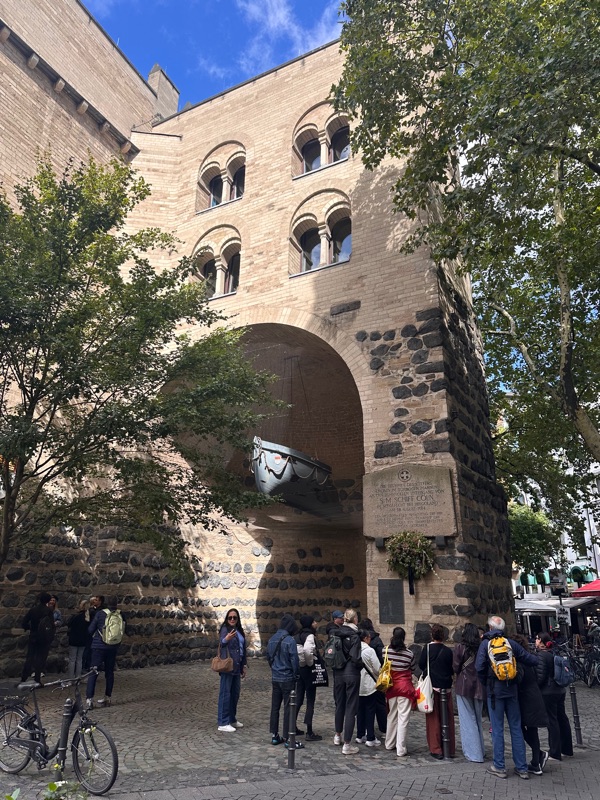
In the early Middle Ages there was a huge wall around the City with 12 gates (3 are remaining). To walk across the entire city would take about 1.5 hours, so it was quite large. This gate is one of the 3 gates. There is a lifeboat hanging from the arch that is from the World War I German war ship called the Cologne. It was sunk in 14 minutes, so not exactly a claim to fame, but the fable says that there were 11 brave survivors who were from Cologne.
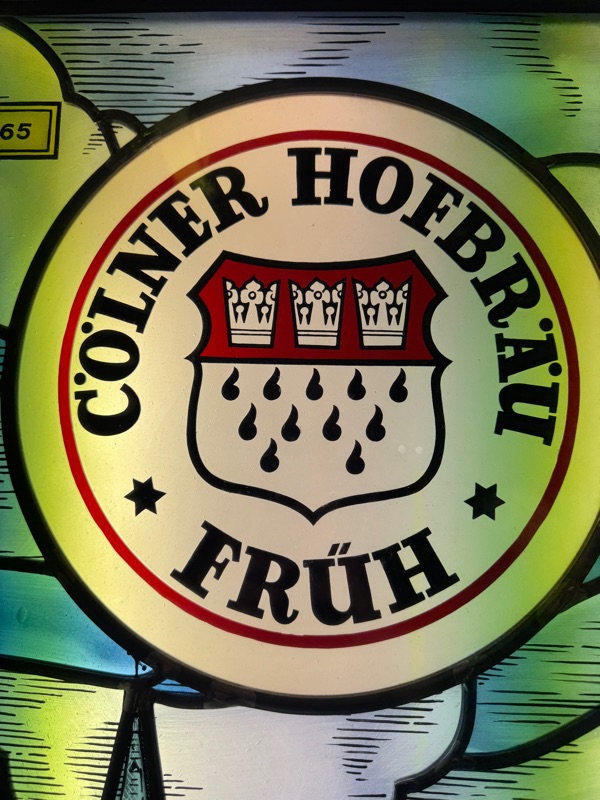
The symbol of the city is 3 crowns which symbolize the 3 wise men whose remains are held in the Cathedral. There are also 11 drops of blood in the symbol which represent the fable of Saint Ursula. The story is - Ursula was about to marry a British prince but the prince needed to be baptized in Rome. Ursula and her 11 virgin friends were stopping in Cologne on their way to Rome and and angel appeared to her and told her that she would die a gruesome death if she went back to Cologne. But she went to Rome and got married and went back to Cologne. At that point the city was under attack by Atilla the Hun, and Ursula offered herself and her 11 virgin friends to Atilla so they would leave the City alone. Atilla agrees to it and they are brutally murdered, and so Ursula became the patron saint of Cologne. The city began selling the bones of Ursula and her friends to tourists until people started getting suspicious that there were so many bones, so the story became that Ursula and her 11,000 virgin friends were killed… until the Pope told them to cut it out.
Fast forward to World War 2 - the city was 91% destroyed by the Allies in 246 air raids. The city of 800,000 became a city of only 40,000 once the war ended, and it had to be quickly rebuilt. But Cologne was snubbed as Düsseldorf was made the state capital even though Cologne was the largest City. So there is some rivalry and hostility between Cologne and Düsseldorf. Bonn was made the capital of West Germany, but no rivalry there. Only 25% of the current population is actually from Cologne, the rest are “immis” or imitators. Since the war, they have had to be very careful when digging underground because there is a risk of 2 big things:
- finding a Roman artifact - like when they were digging a parking garage under the Cathedral they found a Roman wall of the city dating back to 50AD along with a 20m deep well dating back to the late 700s. They ended up buildings he garage around these two things but they are visible just sitting there in the parking garage.
- finding an undetonated bomb from World War II. When this happens they need to evacuate the area and diffuse it. They say there are 45,000 undetonated bombs under the city, and they find a bunch every year, 37 found last year.
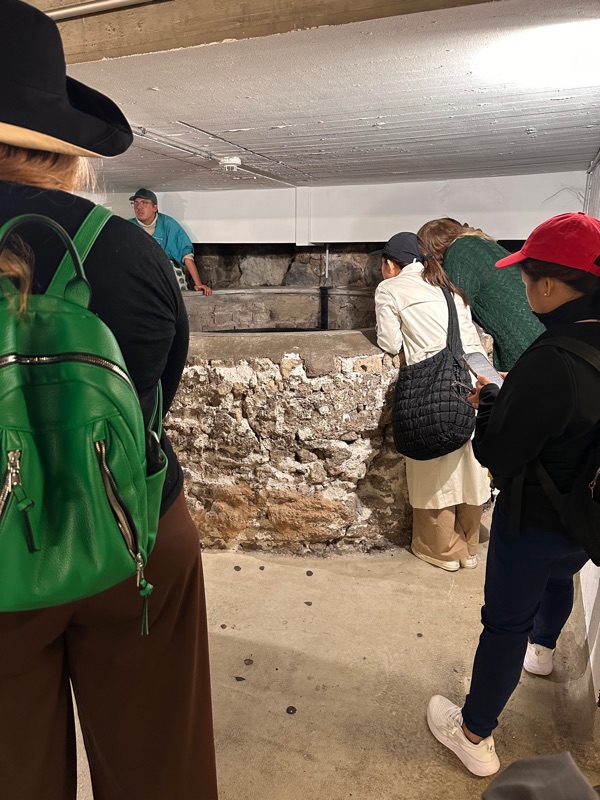
Just a random ancient Roman well in a parking garage
There are 11 rules in the Cologne constitution, and here are the first 3 of them:
- It is what it is
- It is as it comes
- It has always worked out in the end
This has been an explanation for a lot of things in the city - why construction is slow, why the government is dysfunctional, etc
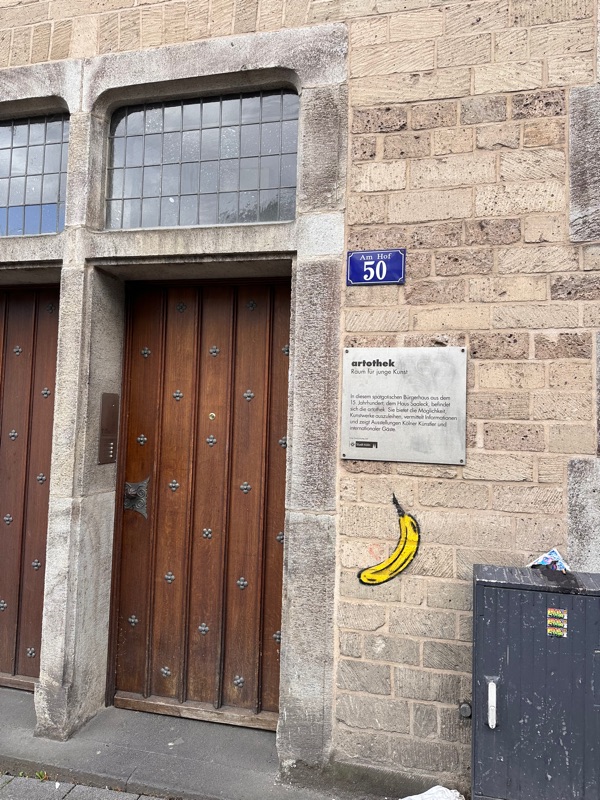
So after the war Cologne became crime ridden and they built a lot of factories because of the cheap rent. Artists moved here and set up art studios in empty warehouses. In the 80s they tore down these spaces and rebranded the city as a media city. There was an artist named Thomas Baumgärtel who went around spray painting bananas on buildings that held good art - it was a symbol that you had arrived as an artist. The significance of the banana is a fable he created for a good story: Before he was an artist he worked in a monastery and he dropped a crucifix and the Jesus broke. He hung up a banana peel to replace the Jesus. People thought it was blasphemous but some thought is was cool. The real story is probably that he was inspired by Andy Warhol.
Cologne was a very smelly city after the sewer system from Roman times fell into disrepair and until modern day plumbing was built in the 19th century. Eau de cologne was invented so people didn’t have to smell the city or each other. Napoleon famously carried cologne all the time.
I also didn’t realize how big Carneval is here in Cologne. It officially starts at 11:11 on November 11 and then slows down for Christmas markets before picking back up again in late January. The story goes, if you commit sins when you are in costume, God doesn’t know it was you. The music they play and sing are all songs about the Rhine, the Cathedral, love, football, and beer and they write new songs every year. They say that the city second only to New York in having songs written about it is Cologne.
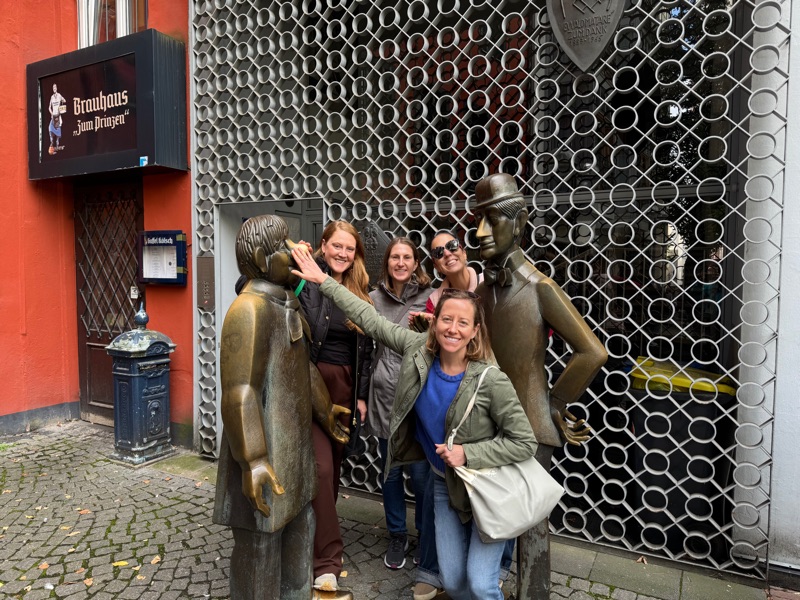
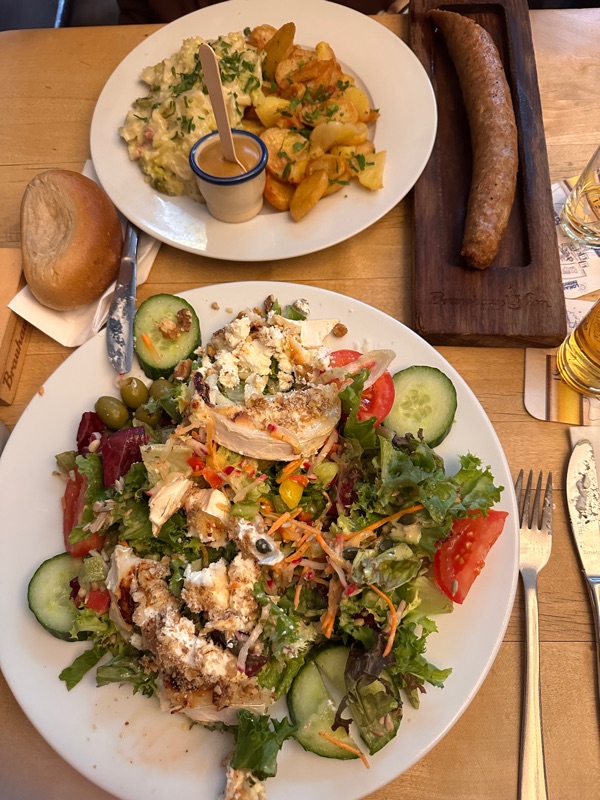
So after a super interesting tour, we went back to the Sion brew house for a late lunch. Carolyn and I got the signature dish which was an enormous sausage with sauerkraut/cabbage and potatoes and of course, more Kölsch. For dessert we got one of the bee swarmed pretzels which were super sweet but pretty good.
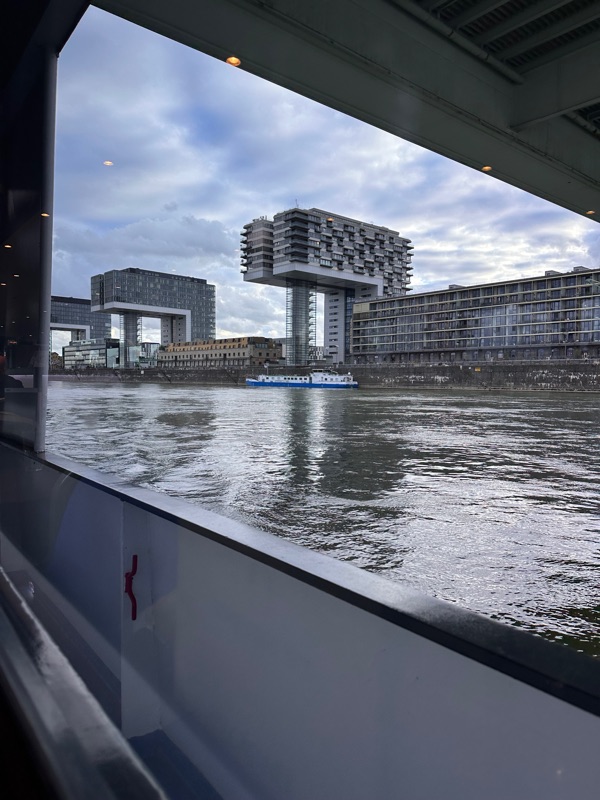
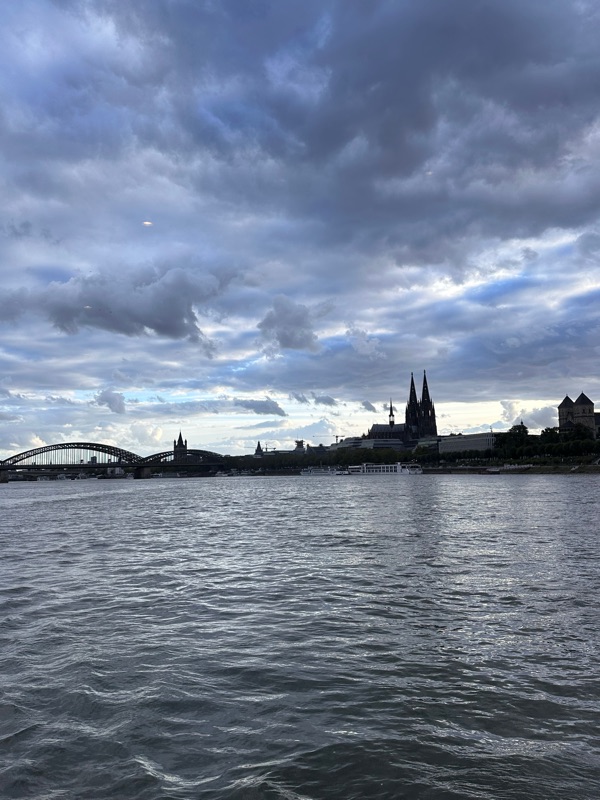
From there we headed over to the Rhine river where we did a boat cruise tour, recommended by Jacob, but not anything to write home about. It went 2 miles up the river, and gave a nice vantage point of some of the cool condo buildings, the Lindt chocolate museum, and the waterfront.
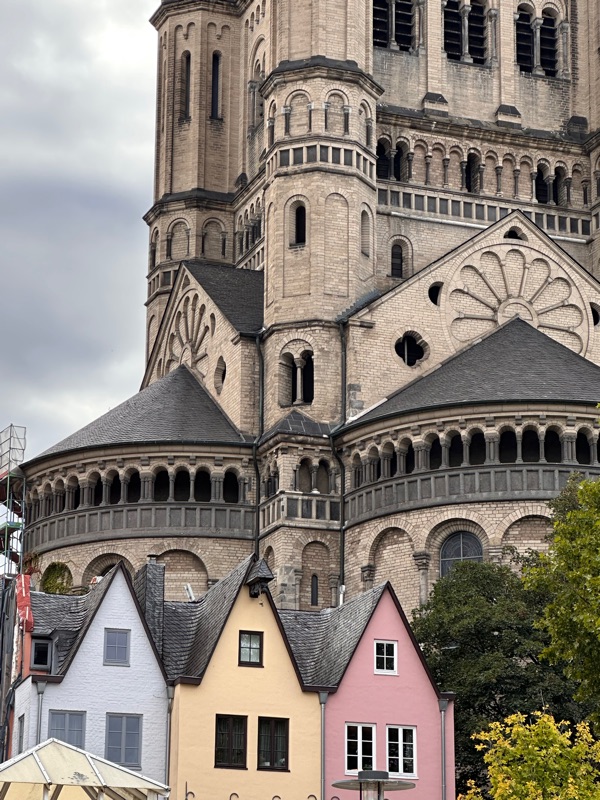
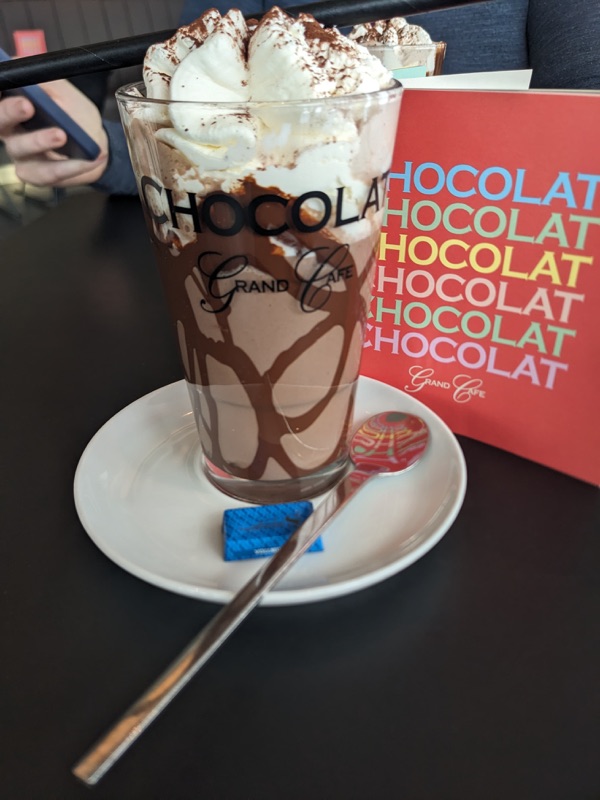
Our last full day in Cologne started with another fun run by two of us (I will let you guess who). We then headed to the chocolate museum, which was a really cool building - it was a hybrid of a historic building adaptively reused and a new building. It talked all about the farming of the cacao beans; 2/3 of all of the cacao is farmed in west Africa in Ivory Coast and Ghana. We learned about sustainable farming practices and it really went deep into the consumer aspects of chocolate, what efforts are taking place to make it more sustainable, and how it fits different into different cultures.
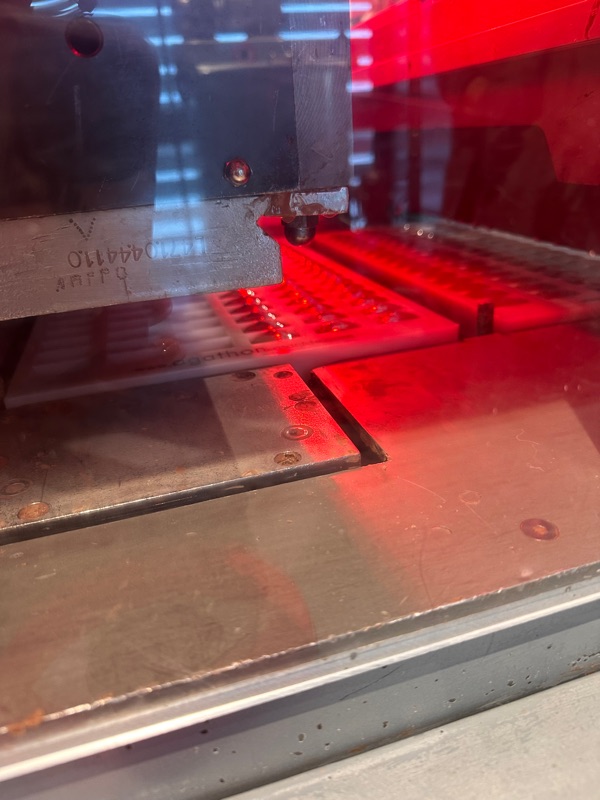
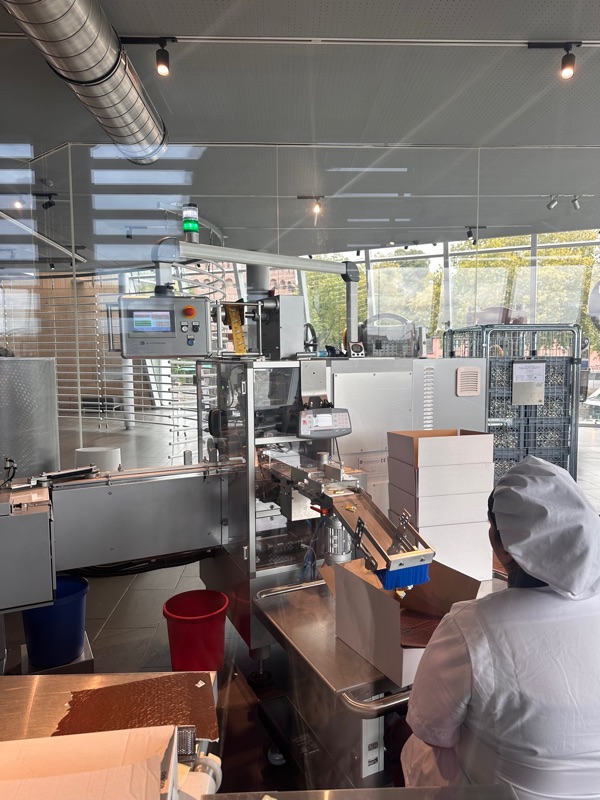
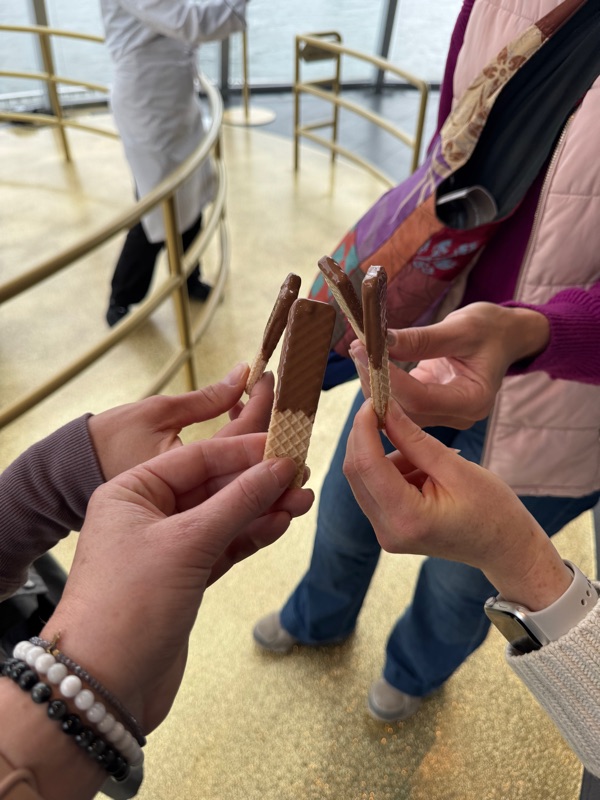
The next part of the tour talked about how cacao beans are processed into chocolate. We walked through a small version of a factory assembly line which was really cool. At one point we had the option to hit a button and divert one chocolate taste test” from the assembly line. At that point we split up because I had become obsessed with the Cathedral and there was only one ticket left for the Cathedral tour, and I took it. But the chocolate tour ended up in the cafe with what I was told was very sweet hot chocolate.
I put my post about the Cathedral in its own post, so check that out!
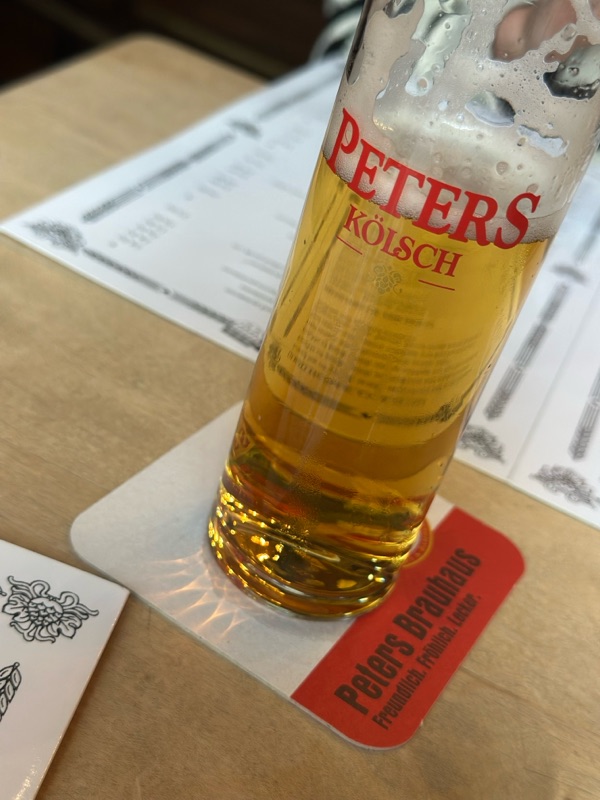
To complete our amazing few days we headed over to our last beer hall, Peters Brauhaus, for another great schnitzel and some more Kölsch, headed back to our favorite grocer The Penny, and got ready for our trip to Berlin!
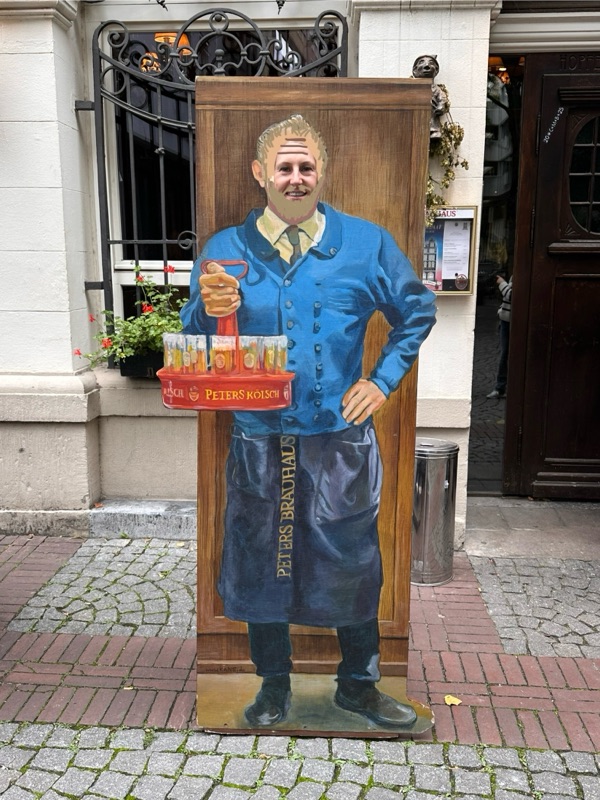
A for artistic merit


Comments
Post a Comment